Concert Season*

Candle procession. photograph (c) Katherine Brown

‘Therefore the Lord himself will give you a sign. Look, the young woman is with child and shall bear a son and shall name him Immanuel.’ … ‘which means, “God is with us.”’

Isaiah 7:14, excerpt from Isa 7:10-16 [NRSVUE] and Matt 1:23, excerpt from Matt 1:18-25 [NRSVUE]

The middle school does not have its own auditorium, so concerts are held at the high school. Tonight’s concert is chorus and orchestra. The auditorium is a cacophony of noise; talking, laughing. Students cavort; parents visit. Odd squeaks sound as one instrument is bowed, then another – individuals rehearsing the awkward bits, each of them alone, not yet in concert. Punctuating the chaos comes the tinkle of piano keys as the accompanist runs through the songs, adding a spritely rhythm to the random-patterned, rising-falling noise.

The chorus director gathers her brood onto the risers. There is some awkward stomping and giggling but no crashes. She sketches a movement with her hands, and the chorus begins to sing a scale – soft voices, vulnerable. On the other half of the stage, the orchestra director sets the beginning strings to tune; they scratch and squeak. The advanced orchestra waits, clustered in little groups, some kneeling backwards in their seats, chatting and laughing.

The concert begins with the chorus, continues with beginning strings. Then the advanced orchestra moves onto the stage.

The performers take their seats. They settle sheet music on the stands; they ready instruments. After a pause, a dark-haired girl — the first violinist – stands, tucks her violin under her chin, and draws her bow across its strings. A single note sings solitary. Is then joined by others, as bows are drawn across violins and cellos and a bass. The notes come in slightly different times and keys until the wavering dissonances are resolved and merge. The director enters, bows, lifts his baton, motions the music to begin.

I love that initiating note … the others that join…. The potential of all the music to come is held in that long-drawn not-quite-chorded note. There will be carols and dances and a concerto by Liszt. But first there is this note, offered up, fragile and tenuous and pregnant with possibility. As small and frail and potent as a baby born God-With-Us. A note begun sweet and solitary. A note rehearsed year after year, across seasons and generations, in different keys and rhythms, until all the instruments are added, and the dissonances drawn together, and the music swells in full power and one song.

Presence signed: God-with-us.

*originally written 2010; posted 2022

Concert Season*

Candle procession. photograph (c) Katherine Brown

‘Therefore the Lord himself will give you a sign. Look, the young woman is with child and shall bear a son and shall name him Immanuel.’ … ‘which means, “God is with us.”’

Isaiah 7:14, excerpt from Isa 7:10-16 [NRSVUE] and Matt 1:23, excerpt from Matt 1:18-25 [NRSVUE]

The middle school does not have its own auditorium, so concerts are held at the high school. Tonight’s concert is chorus and orchestra. The auditorium is a cacophony of noise; talking, laughing. Students cavort; parents visit. Odd squeaks sound as one instrument is bowed, then another – individuals rehearsing the awkward bits, each of them alone, not yet in concert. Punctuating the chaos comes the tinkle of piano keys as the accompanist runs through the songs, adding a spritely rhythm to the random-patterned, rising-falling noise.

The chorus director gathers her brood onto the risers. There is some awkward stomping and giggling but no crashes. She sketches a movement with her hands, and the chorus begins to sing a scale – soft voices, vulnerable. On the other half of the stage, the orchestra director sets the beginning strings to tune; they scratch and squeak. The advanced orchestra waits, clustered in little groups, some kneeling backwards in their seats, chatting and laughing.

The concert begins with the chorus, continues with beginning strings. Then the advanced orchestra moves onto the stage.

The performers take their seats. They settle sheet music on the stands; they ready instruments. After a pause, a dark-haired girl — the first violinist – stands, tucks her violin under her chin, and draws her bow across its strings. A single note sings solitary. Is then joined by others, as bows are drawn across violins and cellos and a bass. The notes come in slightly different times and keys until the wavering dissonances are resolved and merge. The director enters, bows, lifts his baton, motions the music to begin.

I love that initiating note … the others that join…. The potential of all the music to come is held in that long-drawn not-quite-chorded note. There will be carols and dances and a concerto by Liszt. But first there is this note, offered up, fragile and tenuous and pregnant with possibility. As small and frail and potent as a baby born God-With-Us. A note begun sweet and solitary. A note rehearsed year after year, across seasons and generations, in different keys and rhythms, until all the instruments are added, and the dissonances drawn together, and the music swells in full power and one song.

Presence signed: God-with-us.

*originally written 2010

Touch

Six days later, Jesus took with him Peter and James and his brother John and led them up a high mountain, by themselves. And he was transfigured before them, and his face shone like the sun, and his clothes became dazzling white. Suddenly there appeared to them Moses and Elijah, talking with him. Then Peter said to Jesus, “Lord, it is good for us to be here; if you wish, I will make three dwellings here, one for you, one for Moses, and one for Elijah.” While he was still speaking, suddenly a bright cloud overshadowed them, and from the cloud a voice said, “This is my Son, the Beloved; with him I am well pleased; listen to him!” When the disciples heard this, they fell to the ground and were overcome by fear. But Jesus came and touched them, saying, “Get up and do not be afraid.” And when they looked up, they saw no one except Jesus himself alone. As they were coming down the mountain, Jesus ordered them, “Tell no one about the vision until after the Son of Man has been raised from the dead.” 

Matthew 17:1-9; lectionary gospel for Sunday, Feb. 26, 2020.

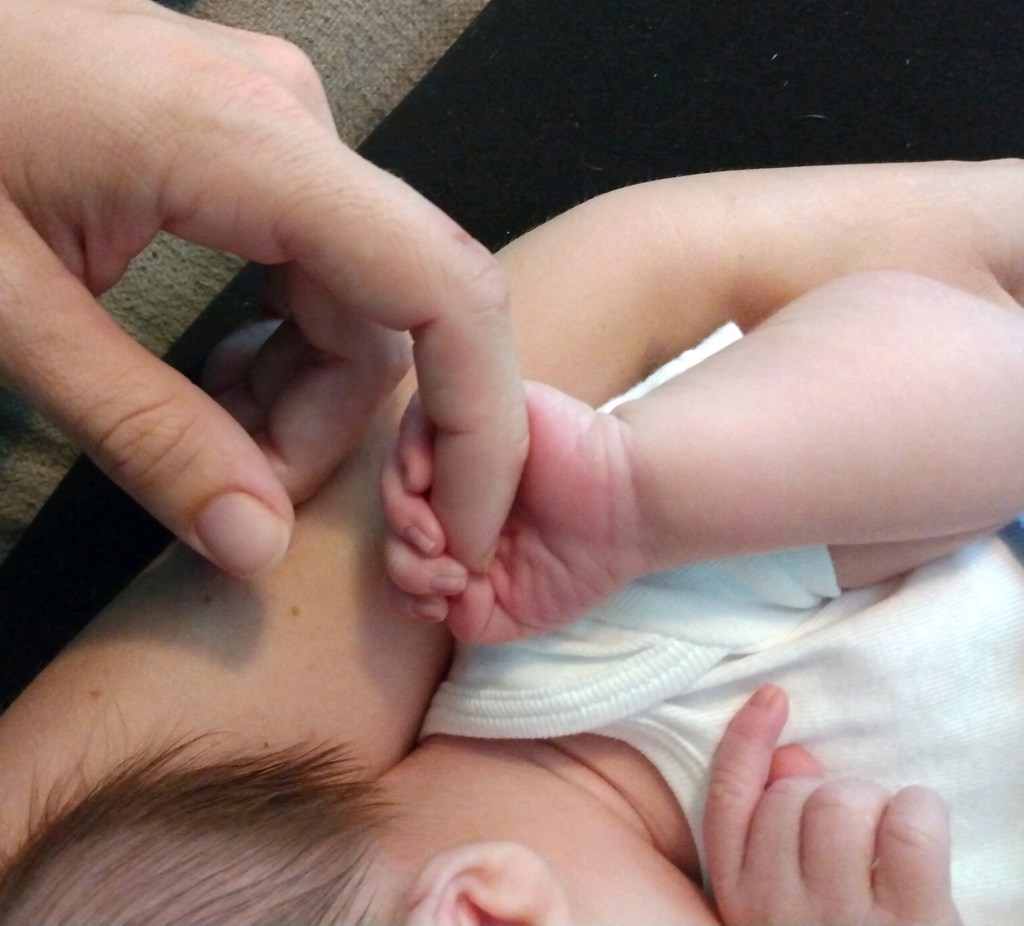
This morning at church, a baby gripped my proffered finger, and I did not resist.  It’s been a while since I’ve had baby fist wrapped around my forefinger, I told his mother, and I tugged ever so gently, more to enjoy the feel of tiny fingers tighten their soft grip than to actually pull away.  Baby fingers have a different weight than a handshake.  I appreciated not only the treat of the baby’s hold but also how well the contact fit today’s text, as I’ve spent the week thinking about touch, and its significance.

Transfiguration Sunday.  It’s a familiar story.  Jesus and his three closest disciples ascend the mountain; Jesus is transformed — shining like the sun.  The disciples and he together are enveloped in an overshadowing bright cloud, and together they hear the heavenly voice, ‘This is my Son … Listen to him!’  

What are they to hear?

Matthew captions the mountaintop event as occurring ‘six days later,’ as if it should be read in light of whatever had happened six days before.  Jesus had asked the disciples ‘Who do you say that I am?’ (Matt 16:15) and Peter had promptly replied, ‘You are the messiah, the Son of the Living God’ (Matt 16:16).  Yet Peter — having correctly named Jesus’ identity — refuses Jesus’ explanation that messiah means rejection, that death comes before resurrection (16:21).  Peter cannot hear this word, protests its utterance, and Jesus rebukes him, ‘Get behind me, Satan!’ (16:23).

Maybe this is the word they need to heed:  that having acclaimed Jesus’ lordship, Peter and the rest need to listen to their lord’s explanation of what lordship means.  Suffering.  Rejection.  Death.  And beyond ….  The heavenly voice may be heard as if its primary injunction is retrospective.  But the story continues on.

‘Listen to him!’ the voice sounds from that cloud so dense in its brightness that it casts a shadow, and the disciples fall on their faces in fear.  And the next word that comes is not aural but haptic.  Jesus comes and touches these men collapsed in terror on the ground.  Jesus touches them.  Then Jesus speaks, ‘Get up and do not be afraid.’

Jesus’ touch strikes me (pun only belatedly realized) because it is unique to Matthew’s telling.  Mark and Luke tell Transfiguration.  But only Matthew tells that the disciples’ terror caused their fall.  And only Matthew tells that Jesus touched them before telling them to get up.  Matthew, the gospel of Emmanuel, God-With-Us (Matt 1:28; 28:20), is the gospel that tells Jesus come so near to the disciples that he can stretch out his arm, reach with his hand, and touch these confused but beloved followers of the Beloved Son.  ‘Get up,’ Jesus says, and because he has touched them, they can.  ‘Do not be afraid,’ Jesus says, and because they have gotten up, they can be not afraid.

I am standing in the aisle in church as Christ’s Peace is passed — handshake by handshake — all around me.  I am clinging to the baby’s hold by letting the baby cling to me.  His mother and I both watch his face and smile.  His gaze is concentrated on my finger in his fist, on the slight motion of our hands connected.  His face lights in pleasure at the play, then falls as mother and I both realize the interval is ending, and I must truly pull my finger from his grasp.

Jesus touches his disciples.  Jesus’ hand on shoulder or back or cupped around the crown of the head.  Comfort in the contact giving strength to heed the speech.  Peter and James and John get up, and they go back down the mountain with Jesus.  Their understanding is still muddled.  They will again be afraid.  But they will have ever after the recollection of that mountain and its brightness and the voice saying Beloved Son (2 Peter 1:16-18).  And maybe, persisting as well, held in skin and flesh, the weight and warmth of Jesus’ hand.  

Through confusion and willful misunderstanding, through news and rumors, through affliction and joy, through fear and boldness and doubt and conviction — from generation to generation — Christ’s touch handed on from beloved to beloved, given and received even this Sunday morning, as a baby gripped my finger.