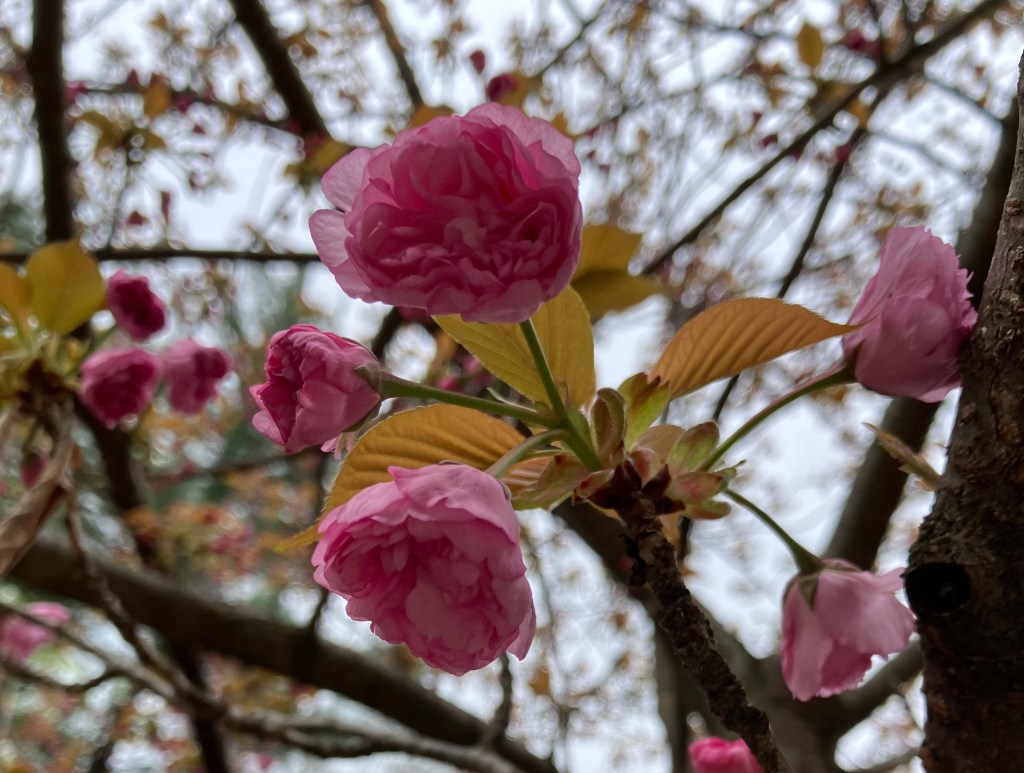
Prophet in Motley

Hoy! All thirsty ones, come to the waters!
And whoever is without silver, come, buy, and eat!
Come buy — without silver and without price — wine and milk!
Why do you spend silver for not-bread? And labor for not-satisfaction?
Hear! Hear me, and eat what is good, and let yourselves delight in rich food!
Stretch out your ear and come to me. Hear, and your very self shall live!

Isaiah 55:1-3a (see Isaiah 55:1-5 NRSVUE]

The prophet’s opening ‘Hoy!’ catches me. A loud call, a sudden summons. It echoes in my ears; I slew my head around as if I might see on the street the speaker I see in my mind’s eye: clad in bright motley, wearing some sort of jingly jester’s cap, clothes and stance and call all setting him separate from the streams of passersby, who step to avoid him and continue on their way.

Hoy! The prophet calls. Speaking inestimable abundance — buy without silver, eat and drink wine and milk and goodness itself. Invitation and question together challenge the world’s prices, turns them topsy-turvey. Why spend, why work, for that which is the opposite of life? (He would not mistake public service with ‘lower productivity,’ as if worth is denominated only in dollars.)

The prophet summons the thirsty — meaning everyone — to a table that seems entirely separate from the one at which the oligarchs sit and squabble, jostling for proximity measured in piles of silver. The prophet describes a different circle. Listen! he cries. Look! he enjoins. Hoy! The summons is urgent; the verbs all imperatives, and plural. Go, all of you, from the table at which sawdust not-bread is sold in exchange for silver. Come, all of you, and sit instead at the table on which bread and wine and milk and good things are set.

Oh, it’s not so easy. The table being fought over is not the table that ultimately matters, but in the here and now the bombast spills over and has consequences. (USDA cancels contracts; the hungry are harmed.) Response is required. The prophet reminds that faithful response is not partisan reenactment of scarcity but empowered by the perception of abundance.

Hoy! Prophet in motley. Now I’m picturing the street performer who juggles at the local farmer’s market. His audience comprises a gaggle of open-mouthed children, whose parents are more attuned to the glad awe on their offspring’s faces than the arcs of balls or clubs whirling through the air. But they’re paused. They are tuned to more than their own busy-ness.

That pause may be itself a beginning.

After all, how many heard the prophet when first he spoke? He was no central figure, around whom the world turned. He cried out a word in earshot only of some. (Seal the teaching among my taught-ones, earlier Isaiah had said [Isa 8:16], suggesting both the dearth of immediate response and the conviction that the proclamation’s power persisted.) Some heard and were taught, some spoke and taught others in turn. The prophet’s call, the people’s march: these have purpose. The large public acts are testimony and sign. Resistance to what is wrong and commitment to work towards right. Yet for all that rallies matter, they tend more confirming than transforming. Change I might effect comes in smaller, more connectional increments.

The farmers market juggler catches all the balls, makes a sweeping bow. The children find their voices, tug parents towards whatever’s next. Grown-ups strange to each other read each other’s faces, catch each other’s eyes — smile awareness of the spell, appreciation of the shared experience. A seed for further word to be spoken; from which relationship may be built; through which transformation be born.

Come. Your presence is the only price. Come and hear. Eat and drink and live.

Speaking Delight

(c) Katherine E. Brown

On account of Zion, I will not be silent.
On account of Jerusalem, I will not be still —
Until as brightness her righteousness goes out,
And her salvation burns as flame.

Isaiah 62:1 (my transl.); see Isaiah 62:1-5 NRSVUE

The lectionary repeats every three years, so I am again looking at this Isaiah text. Again pondering silence and speech, naming and re-naming, brightness and sight. Again wondering if and how there might be any news in this text so old. I’ve written on it already. Why write on it again? Why keep speaking the need to speak? Is anyone even listening, or are we all tired of the same old summons to righteousness, said as if we’ve made no forward motion in the last 70 years?

The lectionary repeats every three years, and sometimes the ancient text and the current calendar seem so in sync that that synchronicity itself speaks. This section from the prophet Isaiah is assigned for Sunday, the eve of Martin Luther King, Jr. Day, this year also the eve of the presidential inauguration. The concurrence of these two observances has its own awkward synchronicity. One looks back at the man who called the nation to ‘Stride Towards Freedom’ — urging us forward towards making real the ideals we ostensibly espouse. The other inducts into office the man who calls for greatness ‘again,’ said with a backward glance, towards some imagined former, now-lost, luster. Each attitude in its way acknowledges that where we are as a people is not where we are meant to be; they hold this conviction in common with each other. So too Isaiah, the prophet who looks back to look forward, modeling the insight that reiteration may be, after all, part of the point.

The oracle that begins in 62:1 is not beginning from scratch, after all. The last section of the prophetic book, Isaiah 56-66, is replete with call-backs to what had come before, renewing and extending God’s promises to God’s people. Not because life had been static since the promises first were proclaimed but because the proclamation had not yet been fully realized: life had lurched forward, and twisted sideways, and shifted again, and still there was more road ahead.

Time it was that God had declared that the time for silence was past — that time had come to to cry out like a warrior, like a woman in labor — that God was birthing something new in and for God’s people, turning ‘darkness into light’ (Isa 42:10-16). The context for those promises was war, exile, inestimable loss. God’s people had cried out their conviction of forsakenness — and God had reassured that the LORD had not forsaken, that God was returning to embrace, that Daughter Zion should again be a rejoicing bride (Isa 49:14-18; 54:6-8).

Fifty or 100 years on, some of those promises had been realized: official exile had ended; deportees had returned to the land of their origin; Jerusalem had been rebuilt. Yet not all returned. The rebuilt city was less than the remembered old. The rough places had not been made all plain nor the crooked straight; God’s glory had not yet shone so universally bright that all flesh rejoiced in seeing it together (Isa 40:3-5).

Creation’s joy may have burst forth at the anticipation of return, but some 70 years on, its song seemed too soon over (Isa 55:12-13). God’s people were divided. They quarreled. They had to be reminded yet again, to keep justice and do righteousness, that God’s salvation was drawing near, that God’s righteousness being revealed (Isa 56:1). The time for silence was long, long past (Isa 42:13-14). The time to cry out is not yet over (Isa 62:1). Words are required again, and still, until righteousness shines bright and salvation flames. God does not cut short God’s bringing-forth any more than a laboring woman stops her labor short of birth. The only way to go is forward. Not because progress has not been made but because it has not yet been fully realized.

Life lurches forward, and twists sideways, and slouches ahead again, and still there is more road ahead. We look back to get our bearings, align ourselves with the marks, and adjust our way. Until God’s promise is realized fully and completely: salvation aflame and righteousness shining bright and all flesh — all — rejoicing in present glory and bridal delight.

Recognizing Joy*

Boats anchored near St. Michael’s, 2017; photo by Katherine Brown

The bliss of boating is how quickly you are very far away and how connected you are to everything around.  We have shipped not only our lines but, for a time, our workaday world.  We are sailing across the Chesapeake in a 30-foot Cape Dory, chartered out of Annapolis, now sailing to St. Michaels.

It is a chilly day, drizzly and dim.  Paul has on his oilskins; the girls and I are in slickers.  Elizabeth is three, a gallant, gay sailor-girl in a bright orange life-vest, a too-big green slicker, a purple hat and bright blue rubber boots. Her braids curl with the damp.  She leans over to watch the waves and hums happily to herself.  ‘The water is like Play-Doh,’ she says. ‘It has fingerprints in it.’  Margaret is four-and-a-half months, a snug bundle tucked on the floor of the cockpit.  Her little face is framed with the hoods of two jackets; her hands are inside her sleeves. She waves her arms for a while and smiles at us, then slips off into sleep, in a small boat on a wide water.

We arrive in St. Michaels before dusk and anchor in Fogg Cove.  The maritime museum and its Hooper Strait Lighthouse are behind us.  The velvet green lawn of the Inn at Perry Cabin is before us.  We’ve been in St. Michaels before; we’ve looked at this water from those shores.  But now we are seeing the land from the Bay.  It’s an unfamiliar view of a familiar place, and we relish the unexpected charm of the known made strange before turning to chores — changing damp socks for dry ones, heating chili for supper.  We hear the chime of church bells and a clock striking and the honking of geese overhead.  The two girls are in the V-berth; Paul has cribbed it in so neither can fall out.  Elizabeth coos, ‘Go to sleep, Margaret.’ Soon we hear them snoring, and we look at each other and smile.  Paul checks the anchor light. ‘Katherine, come.’  In the dark, a swan is swimming by.

Annapolis to St. Michaels, St. Michaels to Rock Hall, Rock Hall back across the Bay.  A wonderful run:  the wind steady and strong, we on a beam reach.  The main is up, and the jib, and the only sounds are the creaking of the lines, the squeaking of the wheel, and the slap of the waves against the hull.  The sky is blue but cluttered with clouds.  We sail past the Baltimore Light.  We sail into the Magothy and past Gibson Island and past Dobbins Island.  The light is growing quiet by the time we put the engine on; pale, green beams shine through the clouds onto the shore.  We motor on in search of an anchorage, sliding around a curve and into a quiet secluded little cove.  A wooded shoreline, the trees touched with russet, just starting to turn.  A few houses, with docks and boats.  No one out but us.

Our last night aboard.  We have beef stew and the last of a cheap bottle of wine.  The light grows clearer and more golden.  Clouds lit in peaceful glory.  We take mugs of milky coffee back on deck and watch the fading of the light.  The water very still, reflecting the pink and blue of the sky.  The highest clouds are lit coral-pink by the sun, the lower clouds purple-grey.  We see a great blue heron, here a screech owl, listen to the fish splash and see the ripples they make, circles that catch the light.  Margaret dozes in Paul’s arms.  Elizabeth leans into my knee and sighs and says, ‘This is very nice.’

The morning is pearly:  cloudy at dawn, then clearing slightly for the sun, mist rising off glassy water.  Elizabeth climbs into the still damp cockpit.  ‘Elizabeth!’ we call. ‘Come back down — it’s still wet out there!’  ‘I’m looking at the world,’ she tells us matter-of-factly.  ‘It is very beautiful.  Did you know God made the world?’  Paul and I look at each other, then turn to see the world with Elizabeth.

We bundle the girls again into sweaters and life vests and hats.  Margaret is in a jolly mood.  Elizabeth is happy winding a short bit of line around a winch.  We leave a curve of tiny bubbles as we motor slowly out of the cove and into the broader river.  The world here is all pearl.  The light is a suffused, pale, creamy grey.  The water is gently rippled glass, carrying in it the shapes and colors of the clouds above.  Water and sky match, endless and shining.  And in this spell-world, our small boat is caught between gleaming oyster sea and cloudy oyster sky.  We are connected to familiar things in unfamiliar ways, and recognizing joy.

* Another old essay revisited; this an edited version of ‘Recognizing Joy’; originally in Chesapeake Bay Magazine, April 2000.