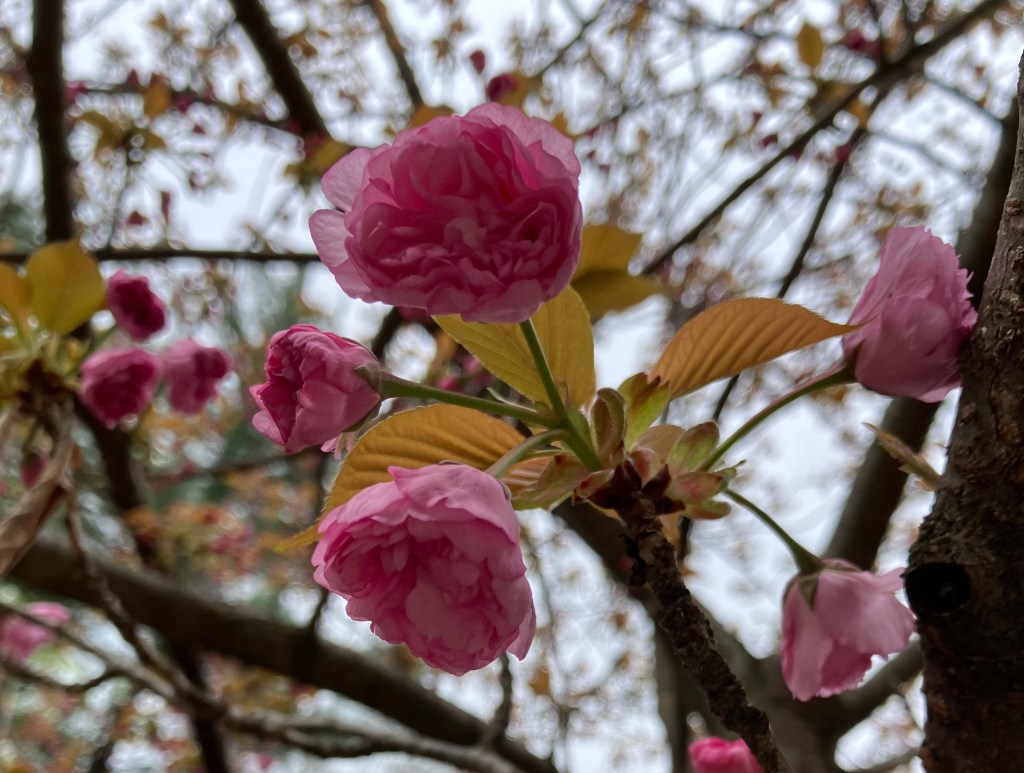
Prophet in Motley

Hoy! All thirsty ones, come to the waters!
And whoever is without silver, come, buy, and eat!
Come buy — without silver and without price — wine and milk!
Why do you spend silver for not-bread? And labor for not-satisfaction?
Hear! Hear me, and eat what is good, and let yourselves delight in rich food!
Stretch out your ear and come to me. Hear, and your very self shall live!

Isaiah 55:1-3a (see Isaiah 55:1-5 NRSVUE]

The prophet’s opening ‘Hoy!’ catches me. A loud call, a sudden summons. It echoes in my ears; I slew my head around as if I might see on the street the speaker I see in my mind’s eye: clad in bright motley, wearing some sort of jingly jester’s cap, clothes and stance and call all setting him separate from the streams of passersby, who step to avoid him and continue on their way.

Hoy! The prophet calls. Speaking inestimable abundance — buy without silver, eat and drink wine and milk and goodness itself. Invitation and question together challenge the world’s prices, turns them topsy-turvey. Why spend, why work, for that which is the opposite of life? (He would not mistake public service with ‘lower productivity,’ as if worth is denominated only in dollars.)

The prophet summons the thirsty — meaning everyone — to a table that seems entirely separate from the one at which the oligarchs sit and squabble, jostling for proximity measured in piles of silver. The prophet describes a different circle. Listen! he cries. Look! he enjoins. Hoy! The summons is urgent; the verbs all imperatives, and plural. Go, all of you, from the table at which sawdust not-bread is sold in exchange for silver. Come, all of you, and sit instead at the table on which bread and wine and milk and good things are set.

Oh, it’s not so easy. The table being fought over is not the table that ultimately matters, but in the here and now the bombast spills over and has consequences. (USDA cancels contracts; the hungry are harmed.) Response is required. The prophet reminds that faithful response is not partisan reenactment of scarcity but empowered by the perception of abundance.

Hoy! Prophet in motley. Now I’m picturing the street performer who juggles at the local farmer’s market. His audience comprises a gaggle of open-mouthed children, whose parents are more attuned to the glad awe on their offspring’s faces than the arcs of balls or clubs whirling through the air. But they’re paused. They are tuned to more than their own busy-ness.

That pause may be itself a beginning.

After all, how many heard the prophet when first he spoke? He was no central figure, around whom the world turned. He cried out a word in earshot only of some. (Seal the teaching among my taught-ones, earlier Isaiah had said [Isa 8:16], suggesting both the dearth of immediate response and the conviction that the proclamation’s power persisted.) Some heard and were taught, some spoke and taught others in turn. The prophet’s call, the people’s march: these have purpose. The large public acts are testimony and sign. Resistance to what is wrong and commitment to work towards right. Yet for all that rallies matter, they tend more confirming than transforming. Change I might effect comes in smaller, more connectional increments.

The farmers market juggler catches all the balls, makes a sweeping bow. The children find their voices, tug parents towards whatever’s next. Grown-ups strange to each other read each other’s faces, catch each other’s eyes — smile awareness of the spell, appreciation of the shared experience. A seed for further word to be spoken; from which relationship may be built; through which transformation be born.

Come. Your presence is the only price. Come and hear. Eat and drink and live.

Parable

(c) Katherine E. Brown

In July, 2023, I found Jesus on my kitchen floor. Literally. I’d just unpacked the groceries into fridge and cupboards and basement pantry, then bent to gather and stow the reusable bags strewn about the kitchen, and saw him lying there on the green and white tiles. Tiny Jesus. I picked him up. He was made of some sort of laminated cardboard. Posed with arms outstretched, feet in first position, hands and feet inked with red stigmata. Haloed head tilted slightly to the side, dark hair lank on his shoulders, great wide eyes of an Orthodox icon. I looked at Jesus lying there in the palm of my hand and wondered where he’d come from. Fallen out of one of the grocery bags? (Unexpected literature has landed in my grocery bags before.). From a recent wedding attended? (I hadn’t remembered adding any prayer cards to my purse.)

I know exactly when I found Jesus because I was so struck by the unexpected encounter that I texted a photo to husband and daughters, and to my seminary sisters, and wrote about it in my journal. It had been a hectic season, with multiple moving parts meshing imperfectly, and I felt more aware of busyness than blessing. I was a bit weirded out to find Jesus on my kitchen floor — those eyes! those bleeding hands and feet! At the same time, I was a bit delighted to think that I went out for groceries and ended up encountering Jesus in my own kitchen. Little laminated Jesus lying on the floor. But Jesus. I tucked him into the pocket at the back of my journal and every so often took him out to hold and look at. Jesus and I gazing at each other. When that blank book was filled, I moved him to the pocket of the next, and then the next after, until I bought some books without pockets, and then left Jesus on my desk, for his own safety.

Sometime last academic year, I saw that the middle image had dropped out of my key-charm. The cross-shaped charm had been a gift from a colleague. The cross was bigger than any individual key on the ring, and the whole was a difficult fit in the small bag I carry. (The key-ring-and-cross fit more easily before I also carried a cell phone, which gives some indication of how long I’d had the key ring and charm.). That said, I liked the heft of the cross in my hand (if not its fit in my purse), and when I saw its center was missing, I was dismayed. I went back out to the car, looking around the driver’s seat, reaching my hand into the creases, bending low to look on the floor. I checked the other car too, just in case. I did not see the center anywhere. For a few weeks, I left the cross charm on my key ring, then decided that it was silly to spend purse space when its center blank seemed to gape absence whenever I glanced at it. I removed the cross from the ring. It was, I admit, a lot easier to snug the keys into my bag. I appreciated the convenience.

This morning, I again came across the key-charm with its missing center. Why am I keeping this? I wondered. Then I thought Wouldn’t it be funny if the little laminated Jesus could fit in the empty center? Maybe I could trim and fit him in. I looked through my desk and found the Jesus, placed him in the center of the metal cross, and realized Oh … oh … This empty space is the place he’d come from. I set him in the outline, pressed slightly, then ran my thumb over the whole. The surface felt smooth. The fit was precise, even to its depth.

A parable cannot be reduced to any single meaning. Nor can this two year sequence of finding and losing and finding again. I might dwell on the shock of that initial encounter in the midst of everyday, an unexpected, weird, delighting, welcome right there on my kitchen floor. I might be stuck instead in the rueful realization that I hadn’t recognized the kitchen-found Jesus as one I’d carried for years — he looked so unfamiliar there on the floor — nor that I had carried the key-charm for months after without seeing that its center was missing. I might pause on the added thought that without that center, the key-charm didn’t seem worth carrying anymore.

For now I’ll rest in the reunion of the two pieces into a single whole. Find some glue to restore the charm securely, then attach it again to the ring. Yes, the whole will take up more space in my small bag. I’ll have to arrange things carefully each time, if they’re to fit. Do it, that the inconvenience of the matter may become its own parable. Re-enacted every time I take out my keys remembering, now, to look for the center image present.

Wisdom Calling

Does not wisdom call, and does not understanding raise her voice? 

“To you, O people, I call, and my cry is to all that live. …

The LORD created me at the beginning of his work, the first of his acts of long ago. …

When he established the heavens, I was there,

when he drew a circle on the face of the deep, when he made firm the skies above, …

then I was beside him, like a master worker;

and I was daily his delight, rejoicing before him always, 

rejoicing in his inhabited world and delighting in the human race.”

Prov 8:1, 4, 22, 27, 30-31; from the text for Trinity Sunday, June 16, 2019;

for full text see: https://www.biblegateway.com/passage/?search=Prov+8%3A1-4%2C+22-31&version=NRSV

Wisdom calling.  Wisdom standing at the crossroads and raising her voice. 

I have a crush on this woman.  I don’t aspire to be her — such attainment is ‘too high for me’ (as the psalmist might say).  I want to be near her, to spend time with her.  Sit at an outdoor cafe and chat as we watch the passers-by.  Then find ourselves occupied by our own conversation — leaning in, bodies turned towards each other, intent on our communion.  Laughing aloud together for the very humor of being alive.  

I want to be friends with her.

I imagine Wisdom so strongly.  She calls to all, here and now. She stands at the crossing — that one, just there, where they’ve shifted the lane-lines over to make room for the new transit line coming in, and the buses lumber crowded in the construction-narrowed road (picture the bus with its shoulders hunched in, like the passengers that stand crammed in its aisle).  Wisdom talks in high flights of poetry and with a well-grounded gumption.  Wisdom talks to me.

I am driving that very road, held by the red light, a bus just beside me.  The weather is drab and damp, not even poetically so, yet I am aware of delight rising with me.  I turn the feeling over and realize Oh, it is because I get to spend the week with Wisdom.  It is because I am headed to the library, where I will pull commentaries and lexicons off the shelves, and look up words and learn from others’ insights.  Pay attention to that joy.  It’s telling something.

Wisdom calls.  Heard or unheard — the very mention of crossroads suggests all the traffic that passes by without even pausing; now the light turns green, and I turn left — Wisdom cries out to all who live.  And for all the seeming playfulness of her proclamation, Wisdom’s delight is not ignorance or avoidance or petty weakness.  Wisdom knows creation.  She was there before its beginning and through every step of its coming to be.  Wisdom’s hymn trumpets deep awareness and full engagement and potent strength. 

Wisdom sings her birth from the LORD — not just created but gotten, in the old English sense, begotten; the verb in v.22 the same as in Gen 4:1, in Eve’s exultant joy at the birth of her first son.  The birth image echoes again in v.25:  ‘brought forth’ is a verb suggestive of the writhing and travail of childbirth.  The LORD in labor, bearing and bringing forth Wisdom, keeping her near, delighting in her daily delight.  Wisdom hymns her identity as joy; joy before the LORD, joy in the world, delight in humanity.  She is entirely herself, and the self that she so freely rejoices in is not solitary but relational.  

I come home from my library delving and pick up the ‘Outlook’ section from Sunday’s Washington Post (a day late) and see the cover article, ‘Changing Channels,’ about women after 50, stories from eight women who’ve reinvented their lives, themselves.  The article opens with the line, ‘When women turn 50, the world starts to tune them out ….’  Woman Wisdom! I think, standing on that street corner, calling to the passers by.  As the article continues, the women describe an ‘energy shift,’ a new sense of freedom to be themselves, to discover anew who those selves are.  This is me, I realize as I read.  Second calling (or third, depending on how you count).  Wandering and wondering and recognizing again and again that I myself (and at my age too!) am in-process.  And the freedom to claim that becoming, is that not also Wisdom?

I am in-process, still being created, still being born.  As Wisdom — way back before the beginning of it all — once was.  And as Wisdom even now delights in the joy of that eternal and daily newness, so might I.

Wisdom stands on the corner, and she looks me full in the face and smiles warmly and stretches out a hand and says, ‘Come and see…’ (John 1:39).  She shows me wonders vast and tiny.  She shows me how to see and how to hear.  How to laugh.  And — please God — how to tell.

I am being born into friendship with Woman Wisdom.  A laughing thought, indeed!  Yet that is the promise.  ‘I love those who love me; those who seek diligently will find me’ (Prov 8:17).  The promise is plural — not just to me, but for each of us, all of us. Be attuned to the delight that signs the encounter.

Birth involves writhing and travail.  But — oh! — then comes the light, and the shuddering gasp and intake of breath, and the life.  

And ‘the morning stars sang together and all the heavenly beings shouted for joy’ (Job 38:7).