Surprised by Joy

Winter Camellias. Photo (c) Katherine E. Brown

“And seeing the star, they rejoiced with very great joy. And going into the house, they saw the child with Mary his mother and, falling down, they worshipped him, and opening their treasuries, they offered him gifts: gold and frankincense and myrrh.

Matthew 2:10-11 (from Matthew 2:1-12, NRSVUE linked here)

The Twelve Days of Christmas are past. Now we’re at Epiphany. Three Kings Day. January 6.

Does that last calendar-date caption sound now more political than liturgical? Maybe recent history reminds us that the text has been political since it was written. The first reported human speech in Matthew’s gospel is, after all, the query uttered by the magi, “Where is the one born king of the Jews?” Don’t adorn their question with the fairy-tale garb of tradition — opulent robes and jewel-studded crowns, imagined camels and an expansive retinue. That keeps the figures safely constrained in ancient story. Suitable for nativity plays (children wearing borrowed bathrobes and crowns of foil-covered cardboard). Nothing to do with our lives once the season’s church services are past. Nothing to do with reality.

Reread that query. Words said by humans, not angels. Words uttered in a real place, at a real time, to a real king — Herod, insecurely power-hungry given the larger real-world context of Imperial Rome in oversight of all his machinations. A query about a king that disturbs a king so greatly that all Jerusalem is disturbed with him. Does the idea of a power-hungry leader and a power-roiled city sound real enough?

Reread the magi, too. Not as kings with retinues but as analysts with responsibilities. In DC terms, maybe, career civil service. Matthew’s magi are not Luke’s shepherds, who were minding their own business out there in the fields until suddenly that choir of tinsel-haloed cherubs appeared in the church balcony. Matthew’s magi have a different role, a different work. They read the visible signs of change in the world; they follow where those signs lead. They observe. They inquire. They discern by what has risen new (that star) and by what is old (the prophets’ writings). They ask questions, including of traditions and cultures not their own. They engage in conversations, even conversations at cross-purposes (“Go and search diligently for the child,” Herod tells the magi as if he too desires to worship) — which to me is perhaps the realest part of this story’s reality: the intersection and opposition of desires both holy and horrific. Which intersection and opposition — accurate information and duplicitous intent — yet conspire to lead the magi towards their journeys’ end.

Herod sends the magi to Bethlehem. And as they go, they see again the star whose rising they had seen before. The star going ahead of them until it stood above where the child was.

“Seeing the star, they rejoiced with very great joy.”

Joy before they entered the house. Joy before they saw the child with Mary his mother. Joy before they knelt and worshipped and opened their treasury to offer him gifts. Joy maybe because the star they’d lost sight of for a while (else why would they have showed up in Jerusalem?) was again bright before their eyes. Leading them. Delighting them. Opening them for encounter anew.

Maybe the reason to return to this story year after year is not just to be reminded of its reality but to be recalled by it to the reality that undergirds and overarches our own story. Not absolving us of the responsibility to observe, to inquire, to set out as steadfastly and to journey as diligently as we can. But recalling us to the the star’s reappearing. Reminding us that our purpose is not power but worship. We may pause in power’s halls (the magi speak to Herod with equanimity, secure in their expertise, unafraid to ask) but it is the star’s promise that draws us on, that guides us to our true end: the encounter that drops us to our knees, curves our mouths into smiling Os of awe, opens the treasure of our hearts that we may give.

Joy is the pivot on which the magi’s journey turns, the twist that sends them journeying again. Traveling another way. Returning to where they had been even if they were not who they had been when they left, re-shaped as they were by their journey in surprising, delighting joy.

May I be re-shaped by their story to journey truly in my own.

Uncorrected Astigmatism*

photo (c) Katherine E. Brown

Now after [the wise men] had left, an angel of the Lord appeared to Joseph in a dream and said, “Get up, take the child and his mother, and flee to Egypt, and remain there until I tell you; for Herod is about to search for the child, to destroy him.” Then Joseph got up, took the child and his mother by night, and went to Egypt, and remained there until the death of Herod. This was to fulfill what had been spoken by the Lord through the prophet, “Out of Egypt I have called my son.” When Herod saw that he had been tricked by the wise men, he was infuriated, and he sent and killed all the children in and around Bethlehem who were two years old or under, according to the time that he had learned from the wise men. Then was fulfilled what had been spoken through the prophet Jeremiah: “A voice was heard in Ramah, wailing and loud lamentation, Rachel weeping for her children; she refused to be consoled, because they are no more.”

Matt 2:13-18; excerpt from Matt 2:13-23

Our Christmas tree was a drug-store purchase 33 years ago.  It is small, with wire branches and stiff paper needles.  We trim it with tiny lights and decorations.  Once the last is placed atop the whole (an angel made of a starched doily, formerly white), we turn off the overhead and take off our eyeglasses and ooh and aah as the tree is haloed with the chrysanthemum-rayed glow that comes of uncorrected astigmatism.

I think of our silly self-delusion as I read this text.  The Slaughter of the Innocents. Every three years, this is the text for the Sunday after Christmas – some years the very next day.  I have been at that worship:  children are invited to wear pajamas; we all sing carols, again, as if to hold the sentiment of the season that bit longer.  The worship service is nice.  We feel it so. 

I can’t imagine reading this text at such a service. It is too horrible a contrast to Christmas — to the holy wonder of late-night candlelight, the giddy excitement of morning gifts.  Yet the calendar holds both together: the remembrance of the slaughter comes just after the celebration of the birth.

The juxtaposition shocks.  It should shock.  Our guts should twist with the horror; our hearts be pierced with the pain – with the way violence follows so naturally from the fear that grasps at power, that refuses consolation, that lashes out in self-defeating self-protection.

There’s no depth of field to sentiment’s glow.  To neglect Rachel’s wailing is to ignore the brokenness of the world, the sick of our own souls, the need that the Creator came into creation to suffer and to cure.  Still there is dark; still we are being born; still we hurt and – God forgive us! – still we hurt each other.  We don’t need tender sentiment; we need astringent love.

The Jeremiah text that the gospel quotes continues on past Rachel’s lamentation into promise:  “keep your voice from weeping and your eyes from tears … there is hope for your future, says the LORD.  Is Ephraim my dear son?  Is he the child I delight in?  … Therefore I am deeply moved for him; I will surely have mercy on him, says the LORD” (Jer 31:15-20).

Jesus escaped that particular slaughter.  But God did not.  God suffered the frightened cries of the children, the frantic cries of their parents.  God suffered it then and later and still.  

God was deeply moved.  God is deeply moved. God will surely have mercy on us all.

Glasses on. See as clearly as I can.

I must look full at the bitterness of Rachel’s refusal to see the strength of God’s saving love.

*Devotion written in 2010; posted 2019; updated 2024

Concert Season*

Candle procession. photograph (c) Katherine Brown

‘Therefore the Lord himself will give you a sign. Look, the young woman is with child and shall bear a son and shall name him Immanuel.’ … ‘which means, “God is with us.”’

Isaiah 7:14, excerpt from Isa 7:10-16 [NRSVUE] and Matt 1:23, excerpt from Matt 1:18-25 [NRSVUE]

The middle school does not have its own auditorium, so concerts are held at the high school. Tonight’s concert is chorus and orchestra. The auditorium is a cacophony of noise; talking, laughing. Students cavort; parents visit. Odd squeaks sound as one instrument is bowed, then another – individuals rehearsing the awkward bits, each of them alone, not yet in concert. Punctuating the chaos comes the tinkle of piano keys as the accompanist runs through the songs, adding a spritely rhythm to the random-patterned, rising-falling noise.

The chorus director gathers her brood onto the risers. There is some awkward stomping and giggling but no crashes. She sketches a movement with her hands, and the chorus begins to sing a scale – soft voices, vulnerable. On the other half of the stage, the orchestra director sets the beginning strings to tune; they scratch and squeak. The advanced orchestra waits, clustered in little groups, some kneeling backwards in their seats, chatting and laughing.

The concert begins with the chorus, continues with beginning strings. Then the advanced orchestra moves onto the stage.

The performers take their seats. They settle sheet music on the stands; they ready instruments. After a pause, a dark-haired girl — the first violinist – stands, tucks her violin under her chin, and draws her bow across its strings. A single note sings solitary. Is then joined by others, as bows are drawn across violins and cellos and a bass. The notes come in slightly different times and keys until the wavering dissonances are resolved and merge. The director enters, bows, lifts his baton, motions the music to begin.

I love that initiating note … the others that join…. The potential of all the music to come is held in that long-drawn not-quite-chorded note. There will be carols and dances and a concerto by Liszt. But first there is this note, offered up, fragile and tenuous and pregnant with possibility. As small and frail and potent as a baby born God-With-Us. A note begun sweet and solitary. A note rehearsed year after year, across seasons and generations, in different keys and rhythms, until all the instruments are added, and the dissonances drawn together, and the music swells in full power and one song.

Presence signed: God-with-us.

*originally written 2010; posted 2022

Babies in Christ

photo (c) Katherine Brown

“And so, brothers and sisters, I could not speak to you as spiritual people but rather as fleshly, as infants in Christ.  I fed you with milk, not solid food, for you were not ready for solid food….”

1 Cor. 3:1-2a [from 1 Cor. 3:1-9 NRSVUE]

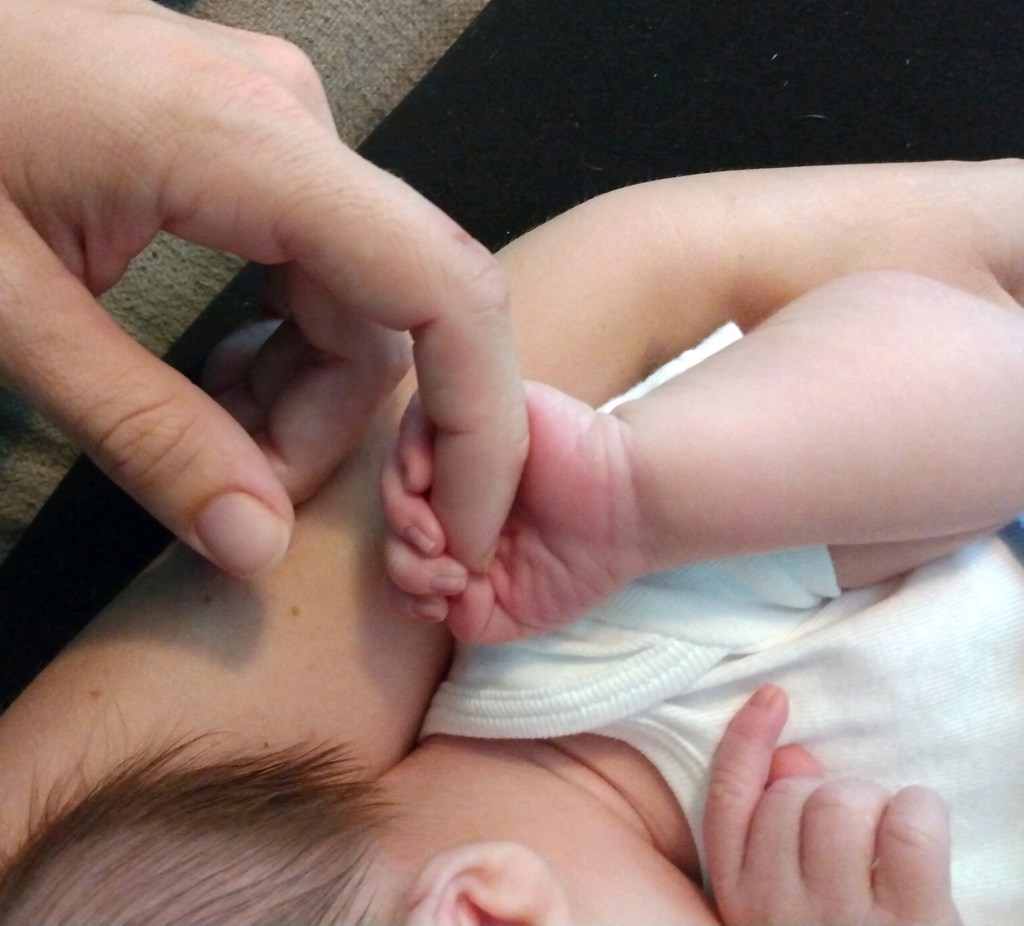
Babies cry.  Newborns mewl; infants wail; toddlers howl.  

Babies cry for hunger. Babies cry for being wet. Babies cry because the toy is beyond their reach, the task beyond their capacity. Babies cry because the bed is so big and the room is so dark and they are so very alone.

Babies cry. “Silly,” we say, scooping up our dears, “there’s nothing wrong.”  We soothe the flushed, hot, tear-wet faces until sobs give shuddering way to hiccups and thence to quiet.  “Silly,” we tease, but we’re wrong.  The tears were infantile; the need was deep:  food, warmth, love.  Crying came not from foolishness but for the lack of words to disclose the need.

(Remember how the tantrums ended when words began?  Remember how – even now – there are times when words get stuck inside and the urge to sob rises again in your own throat?)

Think of the churches as infants – connections and congregations but babies propped up in their pews, loudly wailing their need. The jealousy and quarreling irritate as much as any infant’s again-in-the-nighttime howl.  But the frustration is for the wailing, not the child. (Was it so for Paul?  When he called the Corinthians “infants” was he reminding himself of love as much as calling them to mature?)  How do we worship? What gifts matter most? How do we relate to each other, with the world?  Who is set apart to lead, and how?  The quarreling is infantile; the need is deep:  to see the right path, to walk it true, to live and grow in Christ.

Think of the churches as infants – conceived in love and of grace, birthed through the baptism of Christ’s offering for us.  Don’t think of the petty jealousies or bitter quarrels – all of these are but accidents of transition, incidents of maturing.  Do not start with the present inadequacies for fear they seem the all.  Start instead with the initial intention – holding the beginning as present frees you to look toward its ultimate fulfillment.

Babies grow in painful and amazing stages.  Each day’s experience extends the neural pathways, re-wires and reinforces critical connections, stretches and firms the foundation so that the next day’s connections can be grown.  Experience and learning and growth are interdependent, each building and buttressing the other— and the crying, even, is part of the process.

Think of the churches as infants – God’s being-built buildings.  (“Encourage one another,” Paul wrote the Thessalonians.  “Build up each other.”)  We build ourselves and we build each other and we build together – as one – towards God, who gives all the growth, until we have grown from not-worded infancy to the full measure, the incarnate Word.

(c) Katherine Brown; originally written 2/13/2011

Breakfast on the beach

photograph (c) Katherine Brown

Just after daybreak, Jesus stood on the beach, but the disciples did not know that it was Jesus. Jesus said to them, “Children, you have no fish, have you?” They answered him, “No.” He said to them, “Cast the net to the right side of the boat, and you will find some.” So they cast it, and now they were not able to haul it in because there were so many fish. That disciple whom Jesus loved said to Peter, “It is the Lord!”

John 21:4-7a [from John 21, NRSVUE]

A week of Vacation Bible School, our first after long while. Thirty children, a dozen youth helpers, and another dozen adults. Decorated spaces and energetic music and four stories about the way God feeds God’s people. With manna. With endless enough. With vegetables and water. With bread and fish.

Me, I don’t anticipate VBS with unmitigated enthusiasm. The cartoon puppets and pop music and bright-T-shirts-for-volunteers are not my style. (I come home after, button on a cotton shirtdress, and feel myself again.) There are compensating charms, however: the children’s energy as they sing and move; the one whose pipe cleaner creation is a ‘funny squiggle dancing thing!’ and whose goodbye pat is soft on my back; discussion about how to be a friend, about feeding the whole world.

Mostly I love the stories. I love telling them, acting them, helping the children learn the words with their bodies as well as their minds. I love the moments when a spark seems to catch. We act out the story of Elijah and the widow, letting every child have a turn: each time a child-widow hands a last-cake to a child-Elijah, I slip another plastic cake out of my pocket and onto the ‘widow’’s plate. ‘Let’s do it again!’ the children clamor, and we do. One sunny face looks up and laughs: ’You’re being God making more cakes!’ She is delighted at her recognition of the story in the action; so am I.

I awake the last morning of VBS and feel as if I’ve been dreaming John 21, this text telling Vacation Bible School. I nearly laugh aloud with the recognition of the story in the week.

Breakfast on the beach.

John has already told Easter: Jesus appeared to Mary Magdalene in the morning [20:11-18], and to the disciples that same evening [20:19-23], and to Thomas, too, a week later [20:24-29]. Resurrection has been experienced in the text, and resurrection has been written so that others may know it too [20:30-31]. So. Resurrection. What next?

John seems to take a breath to start on this next movement of the story: ‘After these things…’ He tells us what the disciples don’t yet know. Jesus will show himself again, and ‘in this way’ [21:1]. The disciples have been out on the sea all night, fishing without catching [21:3]. This is told in one terse verse, yet the action stretched over hours and involved much effort. Get the boat out to sea — push it from the shore until it floats, row out farther, hoist the sail to go to deeper water, then repeatedly throw and haul nets that are heavy even when empty. (Organize volunteers and decorate church spaces and plan a schedule and prepare snacks.) Dawn breaks, and in the half-light of early morning, the disciples realize they’ve drifted back in; they see the shore and a man on it. He calls to them, and they answer, admit the result of all their effort. No fish. Throw your net on the other side, the man says, and they do, and then the net is so full of giant fish that they cannot even haul it in.

Only then do they realize what we already know. The disciple Jesus loved is the first to voice his recognition: ‘It is the Lord!’ Peter, hearing, throws himself toward shore. The others come after. Jesus is there. A charcoal fire is burning; breakfast is prepared. ‘Bring the fish you just caught,’ Jesus urges, and they haul in the fish-laden net, and it does not break — this itself worth noting.

‘Come and have breakfast,’ Jesus summons [21:12]. They do.

See them there on the shore as the sun rises and lays a path of light on the surface of the water. The air is scented with the sharpness of morning, the tang of charcoal smoke, the smell of fish roasting and bread baking on a hot rock. The sun rises higher, dazzles in its brightness; the sky turns hard blue, the day grows hot. The disciples do not ask who Jesus is because they do not need to. Their feeling of unreasoning joy confirms what the beloved disciple had said to Peter. Their awareness quivers brim-ful, on the cusp of overflowing. Presence, Jesus had promised. Abiding, fruit-bearing, joy [15:4-11]. Now it is.

The disciples went out for fish. Knowing themselves sent [20:21], even if they weren’t yet sure to whom or for what, they went. Maybe they hoped to encounter again their Lord; maybe they hoped only to be found faithful to his sending. They know resurrection is real. They may not be sure of what comes next, but they move forward as if towards it. Their movement towards the next-thing draws the next-thing in. The long night of fruitless fishing is not fruitless. Day breaks and joy stands on the shore and calls to them even when they do not realize it is he. Awareness is retrospective — It is joy who has called to us! — then, eyes opened, they are able to remain for a time eating and drinking the awareness that God is present to them and they are present to God. On that dazzling bright morning, breaking fast after a long night, muscles aching with prior effort and present rest, realizing again as if for the first time, that resurrection does not end the story but begins it.

And God makes more cakes for us to share.

Let’s do it again!

True Bread

photograph (c) Katherine Brown

“For the bread of God is that which comes down from heaven and gives life to the world.” They said to him, “Sir, give us this bread always.” Jesus said to them, “I am the bread of life. Whoever comes to me will never be hungry, and whoever believes in me will never be thirsty.”

John 6:33-35 [NRSVUE; see John 6:1-15; 25-35; 66-69]

First there were just a few. Andrew and another followed the Lamb when John had pointed him out (John 1:37). Andrew told his brother Simon, and then there were three (1:40-42). Jesus called Philip, and Philip told Nathanael, and then there were five (1:43-51). ‘Messiah,’ we called him (1:41), the one written of (1:45), Son of God and King of Israel (1:49). ‘Son of Man,’ he called himself (1:51). We went to Cana. We went to Jerusalem. We went through Samaria. We returned to Galilee.

First there were a few, and then more, and now there are five thousand. A mixed multitude of disciples and wonderers and wanderers in this place. Come because of the signs.

‘Where are we to buy bread for these people to eat?’ Jesus had said. Why did he ask? Who were ‘we’ to buy bread? How were we to buy bread? Even if we had the six months wages burning holes in our pockets, it was impossible to imagine a sufficiency of bread available to buy nearby.

Look at Jesus and try to read his face. His brows are raised with the query. His mouth is straight. Do his eyes smile? Look at him looking at us, as if he is waiting for us to catch up.

Five thousand people. Five loaves. Two fish. A grassy expanse, room for all to sit, for all to see as food is taken and thanks are given. A hush falls as food is handed around, and food is eaten, and all are fed to fullness. Sounds of chewing and sighs of satisfaction. The spell holds until twelve baskets of leftovers are gathered. Then the murmurs of sharing rise in crescendo as the people begin to catch up — ‘the prophet! the one coming into the word!’ they acclaim (6:14)— then outrun their own understanding, clamor off course, try to force kingship upon him (6:15). Do Jesus’ shoulders sag at their stubborn confusion? He was already recognized as king, and he did not reject the title (1:49-51), but he withdraws from this force, from the crowd’s assumption that kingship is theirs to confer rather than his to be recognized. The crowd wants a king who provides bread and circuses upon demand. They are focused on the feel of their own bellies full; want a reliable repetition of the same. Having been exposed to the possibility of amazement, the crowds won’t risk greater expectation. Please, just another of the same, that’s all they ask.

‘Work for the food that is eternal,’ Jesus said (6:27). The crowd mis-recognized their cue, focused on the ‘work’ rather than the food: ’What must we do to perform the works of God?’ (6:28). Did Jesus sigh? Does he sigh? All the time we were with him, and we did not know, not even at the end (14:8-9).

Trust, Jesus says. The crowd wants a sign so before it can do that work (6:30). They have felt healing (6:2); they have eaten bread (6:14); they have not known them for signs of Jesus’ identity. They mistake in saying that the sight of sign must go before the work of trust. They have it backwards: the work is itself the sign. Their trust is the thing that will open up their eyes to see the truth of the bread they have already been given. ‘Come and see’ Jesus had said to us at the start of it all (John 1:39). Doing preceding the vision, as if it must be always so: following first; sight second. A daily practice of dawning recognition.

Looking back from after the end, times are suddenly joined in my mind. Standing in that grassy place, surrounded by people who had just been fed. The sense of dawning satisfaction — the moment before it reverted to fear of future hunger — everyone there resting a for a breath in glad contentment. Like children. Replete, and slightly tired after supper. The next day, and after, when many had turned back from the offensive claim of incarnation, the discomfiting claim of eternity, Simon Peter’s voice with that same simple tone, answering for us all, ‘Lord, to whom can we go?’ (John 6:60-69).

We did not know fully then. We do not know fully now (1 Cor. 13:12). Even so we may know enough to persist in following the one who has the words of eternal life, the Holy One of God (John 6:69).

‘I am the bread,’ Jesus announces. From heaven. Of life. Bread that tests (6:6). Bread that satisfies (6:12). Bread that is more than enough for those who have gathered in search of a sign (6:13-14).

True bread. Taste and see.

‘Come and see’

photograph (c) Katherine Brown

Jesus ‘said, “Where have you laid him?” They said to him, “Lord, come and see.”’

John 11:34 [from John 11:1-53 NRSVUE]

Sitting in the chapel for our mid-week Evensong. Listening to the lector read John 11. Hearing the familiar story of Martha and Mary and Lazarus, all of whom ‘Jesus loved.’ Lazarus is sick, and the sisters send word, yet Jesus dallies two more days (11:1-6), in which time Lazarus dies (11:13-15). Only then does Jesus go, to be greeted by Martha and by Mary. Each sister in turn asserts that had Jesus arrived more quickly, their brother would be alive (11:21, 32). ‘Yet even now …’ Martha adds (11:22).

‘Where have you laid him?’ Jesus asks; they say, ‘Lord, come and see’ (11:34).

Come and see.

The phrase read aloud catches me unexpected. In the midst of so many familiar phrases, this one leaps out suddenly, surprisingly, clear as a bell.

‘Come and see…’

It’s the invitation Jesus makes at the beginning of John. Two would-be disciples ask Jesus where he is staying. ‘Come and see,’ Jesus replies (1:38-39). ‘Come and see,’ Philip invites skeptical Nathaniel (1:45-46). ‘I saw you,’ Jesus tells Nathaniel, and hearing this, Nathaniel sees who Jesus is; ‘You will see greater things than these.…’ Jesus says (1:47-51).

Come and see. This is the phrasing, the invitation, made at the start of Jesus’ public ministry, before even the ‘first of his signs, at Cana in Galilee’ (2:11). Come and see, Jesus invites followers. Come and see, one follower invites the next. ‘You will see,’ Jesus promises.

And now, here, the phrase is repeated but the invitation is inverted. ‘Lord, come and see,’ Jesus is directed to Lazarus’s tomb, to death and its expected stench.

Death permeates this passage. Jesus has been threatened with death (11:8); disciple Thomas expects death (11:16); Lazarus has experienced death — surely stinks, his sister says, with the smell of four days’ decay (11:39). Death is the postscript to the passage. If Lazarus’s exit from the tomb rings triumphant, the next notes sound ominous: the raising of Lazarus is the sign that precipitates the plot to ‘put [Jesus] to death’ (11:53).

Yet there is this at the start: Jesus’ statement that Lazarus’s illness will not lead to death but to God’s glory, to the glorification of God’s son (11:4). Death permeates this passage but does not define it. Because the word that comes after death is not just life but glory, not just Lazarus to his sisters restored but all God’s dispersed children gathered into one (11:51-52).

Sitting in the chapel. Listening to the lector read. Hearing the familiar story and being caught for the first time by invitation in it.

‘Lord, come and see,’ we summon God to the sites of our suffering.

God responds to our call to come and to see by coming and by seeing. By weeping at death, even at the necessity of God’s own passion — for Jesus’ proclamation of glory is anticipation of the cross. (‘What should I say—‘Father, save me from this hour’? No, it is for this reason that I have come to this hour’ [John 12:23-28]).

‘Lord, come and see,’ we summon God to the sites of our suffering as if God is not already acquainted with the tomb, as if our suffering is not also God’s own.

God comes and sees and weeps for death and works new life. ‘I have come. I have seen,’ God says to us.

‘Now, you, too, come. And you shall see greater things than this.’

Concert Season*

Candle procession. photograph (c) Katherine Brown

‘Therefore the Lord himself will give you a sign. Look, the young woman is with child and shall bear a son and shall name him Immanuel.’ … ‘which means, “God is with us.”’

Isaiah 7:14, excerpt from Isa 7:10-16 [NRSVUE] and Matt 1:23, excerpt from Matt 1:18-25 [NRSVUE]

The middle school does not have its own auditorium, so concerts are held at the high school. Tonight’s concert is chorus and orchestra. The auditorium is a cacophony of noise; talking, laughing. Students cavort; parents visit. Odd squeaks sound as one instrument is bowed, then another – individuals rehearsing the awkward bits, each of them alone, not yet in concert. Punctuating the chaos comes the tinkle of piano keys as the accompanist runs through the songs, adding a spritely rhythm to the random-patterned, rising-falling noise.

The chorus director gathers her brood onto the risers. There is some awkward stomping and giggling but no crashes. She sketches a movement with her hands, and the chorus begins to sing a scale – soft voices, vulnerable. On the other half of the stage, the orchestra director sets the beginning strings to tune; they scratch and squeak. The advanced orchestra waits, clustered in little groups, some kneeling backwards in their seats, chatting and laughing.

The concert begins with the chorus, continues with beginning strings. Then the advanced orchestra moves onto the stage.

The performers take their seats. They settle sheet music on the stands; they ready instruments. After a pause, a dark-haired girl — the first violinist – stands, tucks her violin under her chin, and draws her bow across its strings. A single note sings solitary. Is then joined by others, as bows are drawn across violins and cellos and a bass. The notes come in slightly different times and keys until the wavering dissonances are resolved and merge. The director enters, bows, lifts his baton, motions the music to begin.

I love that initiating note … the others that join…. The potential of all the music to come is held in that long-drawn not-quite-chorded note. There will be carols and dances and a concerto by Liszt. But first there is this note, offered up, fragile and tenuous and pregnant with possibility. As small and frail and potent as a baby born God-With-Us. A note begun sweet and solitary. A note rehearsed year after year, across seasons and generations, in different keys and rhythms, until all the instruments are added, and the dissonances drawn together, and the music swells in full power and one song.

Presence signed: God-with-us.

*originally written 2010

Counting Almosts

Photograph (c) Katherine Brown

[Jesus said:] ‘But about that day and hour no one knows, neither the angels of heaven, nor the Son, but only the Father. For as the days of Noah were, so will be the coming of the Son of Man. For as in those days before the flood they were eating and drinking, marrying and giving in marriage, until the day Noah entered the ark, and they knew nothing until the flood came and swept them all away, so too will be the coming of the Son of Man. Then two will be in the field; one will be taken and one will be left. Two women will be grinding meal together; one will be taken and one will be left. Keep awake therefore, for you do not know on what day your Lord is coming. But understand this: if the owner of the house had known in what part of the night the thief was coming, he would have stayed awake and would not have let his house be broken into. Therefore you also must be ready, for the Son of Man is coming at an unexpected hour.’

Matthew 24:36-44 NRSVue

Are we there yet?’ It’s a familiar phrase. Perhaps heard by some of us as we braved the highways for Thanksgiving reunions. Along with its close relation, ‘How much longer?’ Or our own family’s peculiar version: ‘How many more ‘Almosts’? As in, ‘Are we Almost There, or almost Almost There, or …?’ When our girls were small, the Almost was a variable measurement, not directly correlated to miles or time, although obviously linked to both and affected by traffic. Besides this, the Almost adjusted to accommodate conditions inside the car: shorter tempers could mean shorter intervals between Almosts, as the quicker countdown suggested swifter progress towards the goal. On the other hand, the official Almost tracker (me) was known to deliberately hold a particular Almost an inordinately long time when the question was asked just-too-often.

Are we there yet? It’s a biblical question. It’s a universal question.

The disciples in Matthew’s gospel ask their own version. ‘Tell us,’ they say privately to Jesus, ‘when will this be, and what will be the sign of your coming and of the end of the age?’ (Matt 24:3). That is the question that Jesus answers in the beginning of this passage when he says, ‘But about that day and hour no one knows.’

Actually, Jesus’ speech is longer than that. The disciples’ question is back at verse 3, and Jesus talks for 33 verses, telling of false messiahs and heavenly portents, of betrayal and suffering and steadfast commitment, of the birthpangs of the world, before looping back to their query with a response that is not really an answer. ‘When?’ they had asked. ‘No-one knows,’ Jesus replies. I suspect it’s not the answer desired; I trust it is the answer needed.

The disciples are on a journey with Jesus. They have repeatedly re-calibrated time-till-arrival. They ask ‘When’ and want to hear ‘Almost’ because they don’t want the ‘Now’ they’re living to continue as it is.

We know that. ‘How long?’ we ask when our present is being endured, rather than enjoyed. We can face the journey if we’re actually almost there. Or almost Almost There. When we are fully present, connected, immersed in the experience — sharing meals or telling stories or singing songs along the way — then we look up, surprised at how the time has flown, and we say ‘Already?’ rather than ‘When?’

‘When?’ the disciples ask. Because life in an occupied land is hard. Because they are tired of oppressive division and injustice. Because they are eager to see God’s promises of salvation realized. Because it is so close. Isn’t it? Matthew’s gospel is 28 chapters long, and the disciples are already in chapter 24 — they must be Almost There!

Some 2,000 years on, Jesus’ disciples still live in a time of uncertainty and uneasiness, of oppressive division and injustice, still read tribulation and know pain and cry out in protest. When are you coming to make it all plain, Lord? When are you coming to save?

‘About that day and hour no one knows,’ Jesus replies, re-timing our attention from ‘that hour’ to this one.

This is the hour we are to heed; this is the hour we are to live.

We are not invited to endure this time — waiting with breath held, jaw clenched, fists gripping so tight our knuckles pale — nor to escape it — reverting to some fictional past, dreaming of a pie-in-the-sky future.

Jesus invites us to know this time. Eating and drinking and marrying. Working in the field and in the house. Or the office or the school. Living in the here and in the now. Busy with and alongside of others. Jesus does not just re-direct attention to this must-be-lived present, he describes a busy-ness that joins people together. Dividing lines are not drawn until the ‘when’ of which Jesus does not tell us. That end comes in God’s time, at God’s judgment, in fulfillment of God’s goal of intimate presence and ultimate salvation (Matt 1:21-23). Meanwhile, there is work to do. Feed the hungry, clothe the naked, visit the sick and imprisoned, welcome the stranger (Matt 25:31-46)

Are we there yet? No. Christ’s return will be unexpected but as unmistakable as lightning streaking across the sky, as irresistible as a flood that comes or a thief that breaks in to take.

How much longer? I don’t know. I don’t know if I could bear to know.

Maybe that’s why God doesn’t tell. Because we are too small to bear it rightly. Because we can’t live just counting down to the future, holding on until it comes. We have to live in the present. Deeply. Devotedly.

Devoted to God. Devoted to our neighbor. The neighbor I know and love, and the one I don’t yet know or don’t yet love. Not drawing lines that divide but sharing burdens among — seed time and harvest, grinding and baking. Feeding the hungry. Tending the sick. Welcoming the stranger. Working diligently and watching vigilantly until that day.

How many more Almosts? Fewer than when Matthew first wrote. ‘Therefore you also must be ready.’ And awake.

The thing with feathers …*

photograph (c) Katherine Brown

Now he was teaching in one of the synagogues on the Sabbath. And just then there appeared a woman with a spirit that had crippled her for eighteen years. She was bent over and was quite unable to stand up straight. When Jesus saw her, he called her over and said, “Woman, you are set free from your ailment.” When he laid his hands on her, immediately she stood up straight and began praising God.

Luke 13:10-13, excerpt from Luke 13:10-17, NRSVUE, lectionary gospel for Aug. 21, 2022

‘Bound for eighteen long years,’ he said (Luke 13:16). She heard, and she paused in her praise. Had really been so long. From when would she count it? From when her body’s bearing had become fixed contortion? Or had the binding begun farther back, when the first spider-thread of unease ensnared her? She had dismissed the twinge, whenever it was. Told herself the day’s load had been too heavy, she’d twisted something trying to keep up. But she kept twisting herself trying to accommodate each next sure-to-pass-soon circumstance. Not denying the ache, exactly, but ignoring it. And each day she kept going, that day’s thread twisted together with its fellow until she’d found herself bound by a sticky, wrist-thick rope that kept her hunched in the world, bent over by the spirit’s weight.

When had she last stood straight before this day? The crowd rejoiced at the wonder they had seen. And she in the midst of their sounding joy, was suddenly cast back in her memory.

A goldfinch had caught her eye, and she’d turned her head to follow its flight into the thicket. She’d lost sight of it then. Stood herself still and peered closely until she glimpsed its lemon yellow deep within the tangled branches. A smile had spread wide across her face. She’d had to share the wonder. ‘See!’ she pointed out to passersby. ‘See! A finch, right there!’ Two had paused their own progress and followed her pointing finger with their own eyes. They did not see. She watched their expressions turn from expectancy to puzzlement, then a slight withdrawal towards doubt. ‘See! There!’ she repeated, as if words alone could make it visible. Her insistence kept them there a beat longer, but neither her words nor her pointing finger made them see. The bird was too well hidden to be noticed if you hadn’t already known where it was. Then the goldfinch moved, and its motion made it visible. ‘Oh!’ they all exclaimed together as it flew up from the bush. Another finch flew too, two small brightnesses flitting around each other, darting through the air. ‘Look!’ they exclaimed, “See!’ The sound of their delight drew another from the doorway to see its reason, and so it spread.

How long since she had seen a flying brightness that made her smile? She had walked hunched in the world, bent over by the spirit’s weight, her gaze on her own feet moving along the dusty road. She hadn’t thought of birds. But maybe a tiny thing with feathers had been set within her own soul, too hidden to be noticed unless you knew it there, yet in its own subtle way resisting the rope that had bound her so firmly, working to unwind even one cobweb thread. For she had come here this Sabbath, as she had before, treading the path worn by others’ feet before ever her own had started their journey of persistence.

She had not come asking or expecting birds. She had come in fidelity to the unsuspected feathered thing hidden in the thicket of her own self. The insistence of habit had drawn her there without her knowing why. Then hope had flown and shown itself. Had seen and called her over, pronounced her free and laid hands on her. It had felt as if one hand pulled on her shoulder and one hand pressed the small of her back and together the hands reshaped and stood her straight who had not stood straight for eighteen long years.

She stood now in the midst of the crowd’s sounding joy. Wonder was among them — a bird darting up from the constriction of cares quotidian and extraordinary, delighting with its brightness and its airy flight, delighting even she herself who was its sign, re-awakening her to its presence and its power. A smile spread wide across her face. She had been waked again to demand. ‘See!’ she said, ‘See!’ She had been waked again to the promise that there is something to demand.

Demand the vision. Demand the movement that makes visible hope and joy and life — on the Lord’s day and every day.

* First line from Emily Dickinson