Perfect hate; perfect love

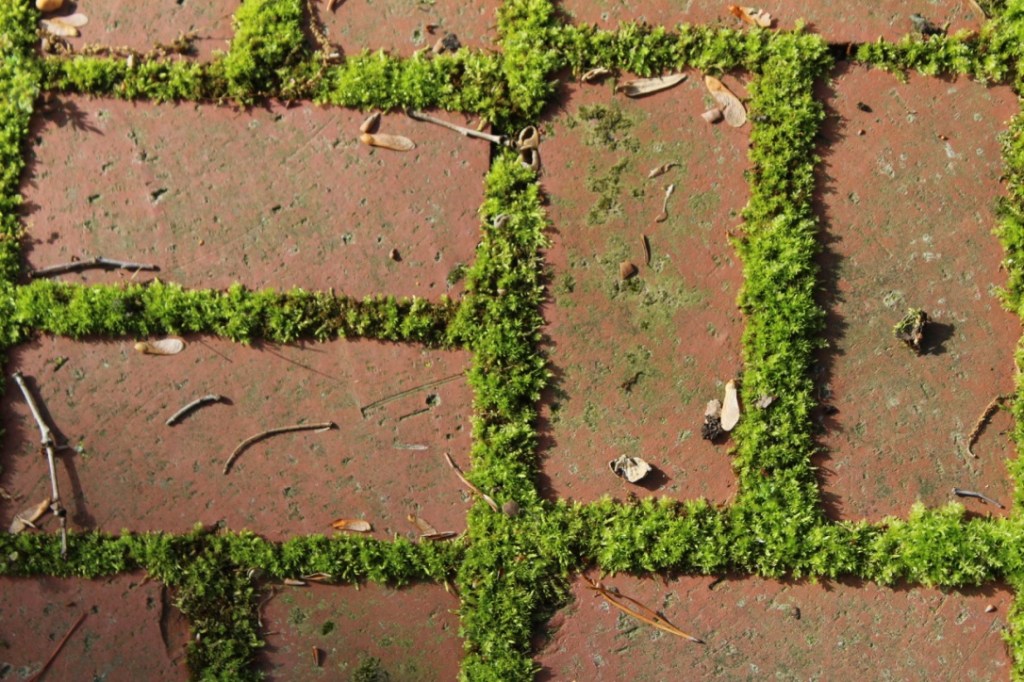
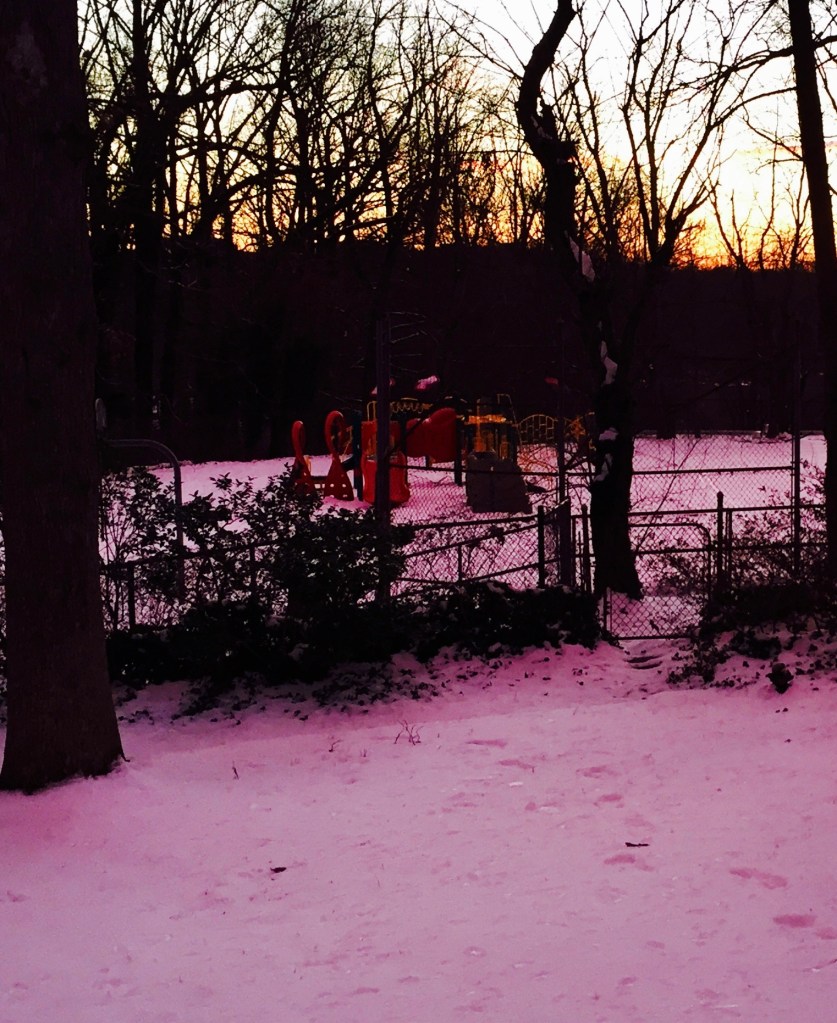
photo by Katherine Brown
How precious also are thy thoughts unto me, O God! how great is the sum of them!
If I should count them, they are more in number than the sand: 
when I awake, I am still with thee.
Surely thou wilt slay the wicked, O God: depart from me therefore, ye bloody men.
For they speak against thee wickedly, and thine enemies take thy name in vain.
Do not I hate them, O LORD, that hate thee? 
and am not I grieved with those that rise up against thee?
I hate them with perfect hatred: I count them mine enemies.
Search me, O God, and know my heart: try me, and know my thoughts:
And see if there be any wicked way in me, and lead me in the way everlasting.
 

Psalm 139:17-24, excerpt from Psalm 139, lectionary text for Jan. 17, 2021

(King James Version because that’s what I’d memorized way back when.)

I memorized this psalm when I was in college.  I wandered campus reciting it, gestured with my hands to show ‘beset behind and before,’ quickened my speech to pull the darkness over me, then slowed my cadence to count thoughts more numerous than sand.  With dramatic passion, I rejected the wicked, then with a hastening urgency addressed the LORD directly, alibiing my firmness.  ‘Do not I hate them, O LORD, that hate thee? And am I not grieved with those that rise up against thee?’  See me, God?  I have ranged myself with you against all those ‘bloody men.’  I am on your side.  So you are on my side.  Yes?  My tone implied the question; hinted at uncertainty; perhaps accounted for the difficulty I had in memorizing the last verses.  ‘Search me, O God, and know my heart:  try me and know my thoughts….’   I chanted them formally, as if to distance the risk of such a prayer.

Psalm 139 has felt so privately mine that I am surprised to find it in the lectionary cycle.  It expresses a relationship too intimate to recite in community — ‘You have searched me and known me ….’  The lectionary portion reinforces that sense as it includes only the verses that dwell on the relationship of psalmist and LORD — omitting any reference to the wicked, to enemies, to any other that would complicate or contradict the connection so intense and pure and personal.  As if this is the only axis of relationship that is. Yet for two weeks, now, of all the psalm’s poetry, the lines that have lingered are those omitted from the lectionary.   I find myself pondering ‘perfect hatred.’  The phrase catches and sticks in a mind still disturbed by the violence at the Capitol as a symptom of anger and fear and hate that is not new only newly fomented.  The inauguration was at most a pause in the storm.  Division persists.  

This practice of writing words is personal.  This is a devotion, not a manifesto.  I write for my own need and faith relationship; theology (if that), not politics.  The presenting offense that day was against the Constitution, not the Bible.  It pertains to the way we relate to each other in and as this nation, regardless of how any of us relates to God.  Except, except … I am commanded not just to love the LORD but my neighbor.  I cannot ponder my own personal escape into the ‘uttermost parts of the sea’ and ignore the violent tearing of our national fabric.  Yes, it was a a fabric flawed in its original weaving, but the pattern of its dreamed ideal has a beauty worth furthering.  This leaky vessel should be rewoven not ripped apart.  We are all in the same sea and so far away from shore.

A day or two after the insurrection, The Washington Post quoted a demonstrator still crowing over the battle for the Capitol, justifying the violence by distinguishing opponents from neighbors: “These police are protecting the villains inside that building. Somebody back in a small town, that’s my neighbor,” [the interviewee] said.  Maybe it was happenstance that the man quoted defined the ‘villains’ of Congress in opposition to those whose identity he construed in terms of literal proximity.  To me, though, ‘my neighbor’ connected immediately with Jesus’ command to love neighbor as self, and the man’s definition was at odds with Jesus’ teaching how to love as neighbor, stretching ‘self’ across a striking line of division. Love of neighbor is God’s ‘royal law.’ The law goes farther still:  Love the stranger among you as yourselfLove your enemy

That one quote — of the entire article — went deep and twisted.  It evoked words I love and claim and am claimed by, yet its undermining revision passed unremarked.  Either it was overlooked or was seen as more of the same from one among a crowd which had perpetrated violence under — literally — the banner of Christ. I was angry.  I hurt.  These words that to me are treasure were mistreated, made to be of little account.  Into this miasma of exhausting emotion came Psalm 139.  Its proud proclamation of ‘perfect hatred’ complicated my pondering of neighbor-love.  What is ‘perfect hatred’?   How does it fit in a faith that is lived not just as a private intimacy between me and the LORD but in relationship with the national neighborhood?  

Some commentaries assert that these verses are ‘unpleasant,’ ‘ugly,’ yet justified as an example of honesty before the LORD.  The honesty — not the hate — is what we are to emulate:  name the hate so that God can transform it to love.  I am not convinced.  The flow of the psalm itself does not suggest that the hate is meant to be a transitory state, set aside as perfection in love is reached.  The hate described is perfect, complete, full.  How can the proclamation of perfect hate be a part of the process of being perfected in love?  

Perhaps the answer begins in following the flow of the psalm.  Say it aloud.  Allow the cadences to pull me in and pattern my thoughts.  Begin with the declaration of God’s presence, close as breath.  Recite the impossibility of escaping from God — and then the truth that enemies make it difficult to experience God’s presence.  ‘Depart from me therefore!’  Then pause.  Remember.  Neither I nor the wicked can depart from God’s presence.  All those prior verses made that plain.  We are bound together in this world, its morning wings and sea surrounding, its light and its dark, its already-written, still-imperfect, yet coming-to-be.  Take a fresh breath and pray those last two verses.  Claim perfect hatred not as passionate emotion against the other but as passionate commitment to the LORD.  That commitment requires the risk of the prayer to be divinely searched, divinely tried, that I may learn to oppose in myself that which opposes the LORD, that I may oppose it as well in any other.  The end of the psalm takes me back to its beginning, the declaration that, bidden or unbidden, God has searched, God has known.  God will do so whether we ask or not.   Bidding God’s knowledge of me, I bid my own of God.  This is the axis of relationship that makes the others possible.

‘Lead me in the way everlasting.’  

Lead me in the way of love.  Lead me to long and work and live for love’s perfection.  Love of God, love of neighbor, love of stranger, love of enemy, love of myself.  Love of this fragile vessel that is our national neighborhood.    

Cup my palm as if God’s right hand, holding us afloat on this wide sea that is not our own.

The word that breaks in.

photo (c) Katherine Brown
Ascribe to the LORD the glory of his name; worship the LORD in holy splendor.
The voice of the LORD is over the waters; 
the God of glory thunders, the LORD, over mighty waters.
The voice of the LORD is powerful; the voice of the LORD is full of majesty.
The voice of the LORD breaks the cedars; the LORD breaks the cedars of Lebanon.
He makes Lebanon skip like a calf, and Sirion like a young wild ox.
The voice of the LORD flashes forth flames of fire.
The voice of the LORD shakes the wilderness; the LORD shakes the wilderness of Kadesh.
The voice of the LORD causes the oaks to whirl, and strips the forest bare; 
and in his temple all say, "Glory!"
The LORD sits enthroned over the flood; the LORD sits enthroned as king forever.
May the LORD give strength to his people! May the LORD bless his people with peace!

Psalm 29; psalm for Sunday, January 10, 2021

Newness is not to be grabbed.  It is gift to be received, to be grasped-by. So I sit upstairs at my desk to read and write and look and listen.  I am given the particular text; I am given the particular time.  I work to connect the two, and I pray for newness to come.

It is a grey day.  The light is low.  The sky is soft, folds of greys, ranging from creamy-pale to a subtle violet.  The trees are black against its ground.  Their bare branches stretch tall, seem to reach, bend and sway as the wind blows.

An aptness at the outset connects text and days, liturgical and political.  Psalm 29 is the text given for Sunday.  The day I sit to it is Epiphany, the twelfth day of Christmas, the celebration of the arrival of the Magi — ‘three kings’ in tradition’s claim — who follow a star and ask King Herod where to find the child born king.   The focus of Epiphany is usually on the Magi, and their miracle star.  At stake is a clash of kingships, and of kingdoms.  And on this very day, Congress meets to ceremoniously process the tally of Electoral College votes so to effect the ideal of peaceful transfer of power according to the people’s will. 

I read Psalm 29.  The cedared height of Lebanon skips like a calf in my mind’s eye as the trees outside my window dance in the wind.  I imagine a forest flinging itself around in some mad jig.  At first there’s a playfulness to the picture.  Then I re-read and realize:  the forest is flung.  The trees don’t dance of their own accord but as the wind takes them.  As the voice of the LORD thunders and breaks and flings and flashes, convulses the wilderness, whirls oaks and strips the forest bare.

As the voice of the LORD makes be.  

Give glory to the LORD, O heavenly beings, the psalm begins.  Give to the LORD ‘the glory of his name’ — a definite glory, peculiarly God’s own, not to be confused or conflated with the glory or strength of any other being.  Give glory to the LORD whose voice sounds with terrible power through the rest of the psalm — over the waters, through the forests, upon the mountains, within the wilderness, until all who see and hear and feel God’s power cry out ‘Glory!’

‘The LORD sits enthroned as king forever.’  

At stake in the psalm — as in the day, liturgical and political — is the clash of kingships.  Heavenly beings are not to set themselves above the LORD, nor is anything on earth.  The imagery is violent.  Creation itself is overwhelmed.  The voice of the LORD has a destructive power.  Its end, though, is not chaos but the conquering of chaos.  The voice of the LORD does not destroy for destruction’s sake but for the sake of life, for shalom — that is peace, and more than peace, wholeness.

‘The LORD sits enthroned as king forever.’   

I hear helicopters passing over. I wonder if they are headed downtown, if they carry news crews or the National Guard.  The morning’s planned ‘protest’ of Congress’s ceremonial attestation has morphed into a mob action.  I leave my desk for updates.  I see photos and videos of the crowd streaming onto the Capital grounds, surging up the steps, smashing doors and windows, swarming through the hallways.  They bear American flags and Confederate flags.  They bear massive banners emblazoned with Trump’s name.  They bear banners that say ‘Jesus Saves’ and ‘God Wins.’  The relative sizes suggest that Trump is the senior member of this trinity.  I text friends.  I turn on the television to flip through the news updates.  The aptness of the psalm is unnerving — its claims of God’s sovereignty are literally contradicted on the streets, Trump and God conflated in the signage borne.  The psalm reminds of what’s at stake: ‘The LORD sits enthroned as king forever.’   Kingships clash.

Day turns toward dusk, and flash-bangs light up the Capitol.  Dusk turns to dark, and events continue to unfold.  Congress is back in session.  Senators speechify and commentators opine.  I talk back to the television, in fervent response to the violence itself and to the sanctimony of the belated disavowal of such mayhem.  I am angry with those whose dismay seems self-serving.  I am angry with those whose words seem sincere yet dangerously mistaken.  ‘This is not the America I know,’ they say, as if their experience is the sum of national identity.  ‘This is not who we are,’ they offer, as if history effectively contradicted the claim.

This is us.  Conflating the unholy with the holy.  Confusing the dominion delegated to us with our own will. Shrinking our conception of neighbor to the one near us.  Excluding the other.  Grabbing after power.  Trying to save ourselves alone. We articulate other ideals, even strive to live them.  But this is who we live.  This is who we are. Name it truly.  This is not who we want to be; this is not who we are called to be.  Tell the truth; make space for transformation.

I want to write flames and thunder and trumpets.  I want words that blaze high enough to light the dark, brass that rings clear amid the din.   I am shocked at my own urgency.   It is not my anger alone that takes me aback but my intense desire to word it.  Why bother?  Why add more words to the myriad already spoken and texted and posted and published?  Where are such words to be found?  What difference do they make?

‘The voice of the LORD is over the waters; the God of glory thunders, the LORD, over mighty waters. …  The voice of the LORD flashes forth flames of fire.  The voice of the LORD shakes the wilderness.’

Words do things.  Words divide.  Words incite.  

‘The voice of the LORD causes the oaks to whirl, and strips the forest bare; and in his temple all say, “Glory!”’  

Words strengthen and words bless.  Words have power to make things be.  

I am given these words — already aflame — that acclaim as king the LORD, God who will not suffer any other to share the glory of his name or throne.  Feel their force stripping away false claims.  Let myself be grasped and moved by their power.  Add my voice to the throng saying ‘Glory!’  The chorus praying peace that is healing and wholeness for all lives, not some, that words and voice together may further that end.

Birth breaks the world open. We are broken of our own doing. Pray birth, now, of God’s own in-breaking.

A New Year

photo (c) Katherine Brown
For thus says the LORD: 
 Sing aloud with gladness for Jacob, 
 and raise shouts for the chief of the nations; 
 proclaim, give praise, and say, 
 “Save, O LORD, your people, 
 the remnant of Israel.” 
 See, I am going to bring them from the land of the north, 
 and gather them from the farthest parts of the earth, 
 among them the blind and the lame, 
 those with child and those in labor, together; 
 a great company, they shall return here.  
 With weeping they shall come, 
 and with consolations I will lead them back, 
 I will let them walk by brooks of water, 
 in a straight path in which they shall not stumble; 
 for I have become a father to Israel, 
 and Ephraim is my firstborn.

Jeremiah 31:7-9, excerpt from 31:7-14; lectionary for Sunday January 3, 2021

When does the new year start?  When the clock counts down to midnight — voices joining the last ten seconds before the ‘ball drops’?  When the explosions of neighborhood fireworks (illegal), have ended, another 15 or 20 minutes past that?  Or does the new year not really begin until after sleep has set its bound around the old year, newness coming not with the clock but with the dawn — however late and low the light appears.  Although even then…. Is morning itself sufficient, or is the first cup of coffee a necessary measure for eyes to open and see the day?  

We’re in January, now.  The ‘new year.’  Yay.

When does the newness begin?  And how?  And when and how do we know it?

‘Sing aloud with gladness,’ says the LORD.  Really?  The exhortation to song seems tone-deaf to the mood of the year, a command difficult to fulfill.  It seems an odd fit for Jeremiah, as well, prophesying as he did so horrifically of judgment and of end.   

‘For thus says the LORD:  Sing aloud with gladness for Jacob, and raise shouts for the chief of the nations; proclaim, give praise, and say ‘Save, O LORD, your people, the remnant of Israel.’ 

Glad songs and shouts of praise and demands for salvation.  

Commentaries and translations note the difficulty in verse 7.  It would make more sense if the songs of gladness were of salvation already realized rather than salvation for which the singers still cry.  Why sing when it’s incomplete?  When the hurt has not been healed, the wounded continue lame, the blind still need leading.  How is it possible to sing gladness and — in the same phrase — demand saving?  How is it possible to sing aloud while weeping, to walk and to plead and to not stumble on the way?  How resolve the contradiction of the proclamation that the LORD will gather Jacob home, that the people will be radiant over God’s goodness, and that the LORD already has ransomed and redeemed, and that we — hearing the words of Jeremiah to whom the word of the LORD came — are called here and now to ‘Sing aloud with gladness … and say ‘Save, O LORD, your people.’

‘Save, O LORD, your people.’

When does the newness begin?

I’m not immune to the idea of New Year’s Eve.  I watch the crowds on TV:  the lights and the energy and the thrum of anticipation that rises as the hour grows near.  I know the falseness of the thought that a critical tick of a clock will suddenly transform the world (Cinderella and her pumpkin coach at midnight notwithstanding) — but even if the the basis is a fictional construct (this particular measurement of time rather than that one), there is something real behind it.  Time does turn.  Night’s dark does give way to day.  Now that we’re past the winter solstice, each day’s light lasts a tiny bit longer than the one that came before.  There is truth in the claim that time turns on into new.  The mistake is not claiming that newness is, nor longing for that newness in our lives.  The mistake is misunderstanding what it is, or imagining it as something we can grasp rather than something we are given, even something that grasps us.

Maybe this is why this passage is set as a text for Christmas.

Birth comes through the world broken open.  

‘Then shall the young women rejoice in the dance, and the young men and the old shall be merry.  I will turn their mourning into joy, I will comfort them, and give them gladness for sorrow. I will give the priests their fill … And my people shall be satisfied with my bounty,’ says the LORD.’ As if newness begins with recognition of what’s been shattered.  As if newness begins with the awareness of mourning and sorrow, of insufficiency and lack.  With the acknowledgement of what we’ve suffered and of what suffering we’ve caused.  With the admission that we cannot save ourselves.

This text does not deny the reality of a broken world, a suffering people, creation groaning.   It’s not all shining delight.  The way is walked by blind and the lame and the laboring.  Supplications shall be raised along with the song.  ‘With weeping they shall come,’ the LORD promises.  Last week I read news stories of those who received the first doses of COVID vaccine and found themselves weeping.  Their tears came as surprise, a belated reaction to all the tears that had been swallowed of necessity, pressed down until it was hard as rock within, there being no space nor energy to spare in the midst of so much suffering.

Weeping signs the pain that could not be allowed until the promise had broken in.  Hope cracks the stone, new-seen as seed.  The seed shows its seam; a hint of green unfurls.

‘Sing aloud with gladness for Jacob, and raise shouts for the chief of the nations; proclaim, give praise, and say, ‘Save, O LORD, your people, the remnant of Israel.’

Newness begins as we cry out for it.  Even while our eyes are still confused by exhaustion and by gloom.  Even before the coffee.  Even before the dawn.  

Newness begins now.  In gladness sung to the one who can save, demanding the salvation that only that one can give. 

Cast the Line

Hear my cry, O God;
    listen to my prayer.
From the end of the earth I call to you,
    when my heart is faint.

Lead me to the rock
    that is higher than I;
for you are my refuge,
    a strong tower against the enemy.

vv. 1-3, from Psalm 61

Psalm 61 is a call uttered from a place of loneliness, a cry sent from the end of the earth, the

‘Just a cloud?’ photo (c) Katherine Brown

Psalm 61 is a call uttered from a place of loneliness, a cry sent from the end of the earth, the space where the psalmist sits solitary. This is her faint heart’s final plea. She centers herself for one last desperate cast, doubles the force of the imperative by its repetition – Hear me, Listen to me – throws the line with all the strength she can muster in this place of bitter pain.

Psalm 61 is a call uttered from a place of loneliness, a cry sent from the end of the earth, the space where the psalmist sits solitary. This is her faint heart’s final plea. She centers herself for one last desperate cast, doubles the force of the imperative by its repetition – Hear me, Listen to me – throws the line with all the strength she can muster in this place of bitter pain.

And the line catches. This line – thrown from the ends of the earth with whatever force a faint heart can rally – catches hold, grows taut, pulls the psalmist past the force of her own throwing, and up to the rock that is higher. The plea for ascent becomes the means of ascent. The psalmist’s prayer draws her out of her own overwhelmed heart in its feeling of small and solitary insufficiency to the recollection that there is a rock above, a strong tower, a pair of sheltering wings. This high refuge rock reorients the psalmist’s vision. She sees that her plight is not solitary, not hers alone, nor the sum of all that is. 

She is drawn beyond the earlier, enmeshing fear to recall past mercies, reclaim promised loyalty, re-member herself among all those who fear God’s name. Her practice of prayer pulls her from the particularity of her own pleading and reweaves her into the web of the faithful. Her cry reconnects her to the whole of the community, even to the king.

The needs and joys of all the congregation are offered up by this yet-single but no longer solitary “I”, as she commits to keep casting her line in the glad joy of knowing that that God’s steadfast love and faithfulness thrum through its taut-held length, vibrating with praise her heart now sings.

Cast the line. Feel it catch. Hold tight. The pull will come.

The face of God

 So Jacob called the place Peniel, saying, “For I have seen God face to face, and yet my life is preserved.”

Genesis 32:30; excerpt from Genesis 32:22-31, lectionary text for Aug. 2, 2020

photograph (c) Katherine Brown

The alarm rings at 6:30.  I shut it off, realize I am awake, get up, and slip out of the sleeping house to walk.  Sunlight light gilds the tops of the trees to the west; the rest of the world drowses in its own shadow.  I set off down the hill, counting on its slope to pull me into some sort of pace.  I have trouble walking at first. My stride is shortened by my hip joint catching.  I stop to try to shake or stretch out the click then continue on, attentive to my step until it lengthens slightly.  Maybe this is my entry into the text:  my hip joint sticky and my stride slightly askew.  Me and Jacob limping into the day

Jacob wrestling.  God wrestling.  This text is familiar as these neighborhood streets, grown more familiar these months mostly at home.  I try to pay heed to the slant of the light, shifts in the greens.  I move through air that breezes warm and moist as breath.  As if the world around me is alive, and clinging to my skin as I pass.  Clinging as close as that stranger did to Jacob?  As close as Jacob to he?  Close enough to touch and disjoint.  Close enough to hold for blessing.

I teach this text every semester of Intro.  I point out to students how Genesis 32 connects back to 28, how wrestling and demanding are affirmed as part of relationship.  Look at the names, I say.  Beth-el.  Isra-el.  Peni-el.  House of GodWrestles GodFace of GodJacob encounters God.  Jacob demands, and Jacob wrestles, and for all these pains, Jacob is renamed and blessed

These connections can feel as rote as my route through the neighborhood.  First the downhill, then a longer loop.  Usually I turn right, to the east and have to squinch my eyes against the dazzle of the sun.  Today I turn left, away from the sun.  My shadow stretches long and slender before me.  Not having to half-close my eyes against sun too bright for human sight, I can look and see all that it is lighting.  Pavement.  Parked cars.  Brick houses and grassy yards and leafy trees, crepe myrtles blooming pink and cream and purple and red.  Bright zinnias and giant sunflowers and crinkle-blossom hibiscus. Other early walkers.

Turn differently in this text.  The same streets, verses, words, but a different route.  The relationship between Jacob and God is not itself all that is at stake. Jacob’s reunion with his brother brackets this pivot of God-wrestling.  Twenty years before, Esau had howled in anguish that his trickster brother was truly named — the twin who had grabbed Esau’s heel having grabbed as well Esau’s birthright and blessingJacob has reason to fear Esau.  Heel-grabbing Jacob now grabs at a stranger, grapples and holds, refuses to let go.  Blessing and a new name (blessing as a new name?) are bestowed:  ‘You shall no longer be called Jacob, but Israel, for you have striven with God and with humans, and have prevailed.’ The explanation of the name discloses that more is implicated than relationship with God alone.  Jacob has contended with God.  Now Jacob-Israel must go forward and contend with his twin.  

Limping into the day, Jacob sees his brother coming.  Esau falls on him and hugs him (an embrace as close as wrestling?) and weeps and kisses his twin.  The brothers fence in speech yet amid the glint of their words parrying comes this glowing gem:  ‘Truly to see your face is like seeing the face of God—since you have received me with such favor.’

Jacob has seen God’s face.  Now he is able to claim the same in the face of his long-distant twin.  It reads as if this glimpse is the reason, the aim, of the other:  encounter with God for the sake of encounter with brother.

Jacob wrestling tells as well why I return to this book so persistently, every day walking words that feel familiar underfoot.  Wrestling with the text, I experience encounter.  The blessing that comes, when it does, is the twist of stride and sight that is less the face to face glimpse of a brightness so bright as to dazzle my seeing and more the realization that when looking on the face of another — brother, neighbor, stranger-among-you — I am seeing what that brightness lights.

‘Truly to see your face is like seeing the face of God.’

I round back up the hill towards home.

Stitching Stones

photo (c) Katherine Brown

Jacob left Beer-sheba and went toward Haran. He came to a certain place and stayed there for the night, because the sun had set. Taking one of the stones of the place, he put it under his head and lay down in that place.  And he dreamed that there was a ladder set up on the earth, the top of it reaching to heaven; and the angels of God were ascending and descending on it.  And the LORD stood beside him and said, “I am the LORD, the God of Abraham your father and the God of Isaac; the land on which you lie I will give to you and to your offspring; and your offspring shall be like the dust of the earth, and you shall spread abroad to the west and to the east and to the north and to the south; and all the families of the earth shall be blessed in you and in your offspring.  Know that I am with you and will keep you wherever you go, and will bring you back to this land; for I will not leave you until I have done what I have promised you.”   Then Jacob woke from his sleep and said, “Surely the LORD is in this place—and I did not know it!” And he was afraid, and said, “How awesome is this place! This is none other than the house of God, and this is the gate of heaven.” So Jacob rose early in the morning, and he took the stone that he had put under his head and set it up for a pillar and poured oil on the top of it.  He called that place Bethel; but the name of the city was Luz at the first. 

Genesis 28:10-19; lectionary text for Sunday July 19, 2020

I’m struggling to tally time now that we’re in the long green season.  Recurring commitments are fewer.  Variable days sum to patternless weeks with no rhythm of effort and ease that I can identify, lean into, find myself carried upon.  Plans for fall teaching remain preliminary; each institution anticipates a different mix of online and in-person instruction.  I should plan my own courses, however tentative they must needs be, but trying to make firm a small ground in a sea of indeterminacy itself overwhelms.  It is exhausting to be in an in-between space.  I have company worldwide, I know, all of us floundering together in the demands of our own dailiness amid pandemics viral and political.  The waves of our efforts alternately criss-cross and pile up.  Notwithstanding such good and broad company, I am tired.  Where do I rest?

‘A certain place.’  The precise imprecision of the phrase tugs.  It sounds as in-between as I feel now.  It is somewhere.  It might be anywhere.  It is the place to which Jacob has come at that point in time, and because the time is after sunset, it is the place where Jacob lies down.  He sets a stone — a small firm ground in a sea of indeterminacy — and he sets himself to sleep in that ‘certain place.’  Jacob is leaving his country, his kindred, his father’s house not because he has been summoned thence by the LORD but because he has been sent away by that very father, from that very kindred, lest his angry elder twin slay him and his mother who loves him lose both her sons in one day.  Jacob grabbed his brother’s share; his letting go of home is the reaping he’s sown.  Embattled brothers — Isaac and Ishmael, Jacob and Esau —  the lectionary texts of these weeks chime too closely with the news, which itself overwhelms.  But there’s no rest in just noticing the pattern of disputed inheritance, grappled-for blessing.  There must be something more.  We’ve a long journey to go, all the way to Haran.  There’s justice to bring; a pandemic to navigate; courses to plan; dinner to get; laundry to do.  I haul the basket downstairs to sort the clothes.  I spy a loose thread, tug to follow it back to its source, and realize that the hem on my dress is unraveling, along with so much else.  I pause sorting, find scissors and the sewing box, cut the machine-stitched thread and thread each end in turn through a needle, so that I can restitch the hem, knot it securely off. 

‘A certain place.’  It is a particular place, location undefined.  Then it turns into ‘this place’ — the place where the LORD is, therefore ‘awesome,’ ‘the house of God … and the gate of heaven.’   In the place, in the night, Jacob lay down with a stone at his head, and Jacob saw the ladder, angel-traversed, and saw and heard the LORD.  To Jacob, God reiterates the promise given Abraham, given Isaac:  land and seed and blessing for all the earth.  To Jacob, the LORD adds a word:  ‘Know that I am with you and will keep you wherever you go, and will bring you back to this land; for I will not leave you until I have done what I have promised you.’  

Usually I skim God’s speech as repetition of what God had told Jacob’s father and grandfather.  The dream-vision of the stair to heaven is so fantastic as to cast what follows in its shadow.  But Jacob, waking, doesn’t talk of a ladder or of angels.  Jacob, waking, talks of the LORD ‘in this place.’  Jacob, waking, is afraid.  The ladder and the anointed stone are striking brackets, but God’s speech is the center on which the whole turns.  God promises Jacob presence-with and does so distinctly:  ‘I will not leave you until I have done what I promised.’ Read it again:  ‘I will not leave you until ….’  Somehow the ‘until,’ to me, intensifies the promise.  Its implicit contingency — that the abiding will end — adds urgency.   God cleaves to Jacob, a commitment as sharp and clinging as that of marriage, and does so not first for Jacob’s sake but for God’s own fidelity to God’s own purpose.  

Maybe Jacob hefted God’s promise in his hand as a round weight around which his fingers could curl and be comforted.  Maybe Jacob felt God’s promise as a rock in his shoe, a sharp-edged pebble that never settled enough to be ignored but repeatedly shifted in mute insistence on its irritating presence.  Maybe Jacob felt both:  God’s purpose as demand on Jacob; and also God’s purpose as demand for Jacob.  

Jacob wakes and sets up his stone as witness.  Jacob will not stay, but the stone will.  A wordless statement of the encounter.  A small firm ground in the vast and moving sea.  And, having set up the stone, Jacob moves on from there.  That ‘certain place’ was not a large space, after all.  An overnight only.  There are miles to go, flocks to keep, wives to marry, sons to beget.  There will be a day to return, another night — this one spent sleepless.  There will be return and reunion.  Meanwhile, there is this stone of Beth-el, house-of-God.  Meanwhile, there is God’s presence-with.  Persistent for the accomplishment of God’s purpose; insistent on Jacob’s participation in it.  God holding Jacob up; God hauling Jacob on.

The anointed stone does not punctuate the start of Jacob’s story, nor its end.  It is a knot in the thread that keeps the seam from unraveling.  God had a will for the world’s blessing before Jacob was born to be part of it; a will for Jacob’s part before Jacob was grown to carry it; a will to carry Jacob when Jacob will not carry himself.

Is there rest in that for me?  A bit of firmness to hold, be held by?  An overnight, even if vivid dreams inhibit restful sleep?

The machine chimes the end of the load.  I shake the wet wash straight, pull the wrinkles out of cotton dresses, stretch the line from house to tree, and hang the clothes outside to dry in the heat.  I pause and check the restitched hem.  It’s held.  That’s one bit of firmness to add to the text’s reminder that God’s purpose is for blessing and that God’s will is persistent — abiding with me, even in spite of me, insistent for me when I cannot insist for myself.  It’s not rest, exactly, but a knot to my thread as the stone was to Jacob’s, that holds against unravelling.  One cannot go back, but a new seam can be sewn, a new pattern shaped to God’s purpose.  One stone — stitch — at a time.

Hineini!

After these things God tested Abraham. He said to him, “Abraham!” And he said, “Here I am.”  He said, “Take your son, your only son Isaac, whom you love, and go to the land of Moriah, and offer him there as a burnt offering on one of the mountains that I shall show you.” 

Genesis 22:1-2; from Genesis 22:1-14, lectionary text for Sunday June 28, 2020

photo (c) Katherine Brown

I am circling this text.  Going round and round it, searching for a way in.  I’ve been circling this text for days.  That ache along the back my neck must come from keeping my head continually craned and taut in its direction, fixing my gaze on the it.  Did I think it might stretch out and leap upon me if I relaxed my vigilance?  Or did I circle and watch in hopes of seeing the story crack open of itself, reveal to me its meaning. It’s a hard text to hold as a center.

Genesis 22, the ‘Akedah’ or ‘binding’ of Isaac.  This was the first biblical text I encountered in Hebrew, it being the first full story presented in the textbook used.  We had barely made the acquaintance of the Hebrew alphabet when we were pitchforked into this harrowing tale.  The necessary slowness of our translating increased the tension of the story’s unfolding.  If verse 1 had the charm of first encounter with vocabulary and grammar, verse 2 immediately raised the stakes.  God’s words to Abraham increase in specificity — ‘Take your son, your only, the one whom you love, Isaac’ — son Laughter named at the end of the series of phrases as if the crown of all that had come before — ‘and go to the land of Moriah and offer him up as a whole offering.’  

Offer up your son as offering.   

Did our breaths catch in our throats as we read?  Was our protest of God’s command or Abraham’s silent compliance?  ‘And Abraham rose early in the morning,’ as dutiful in taking his son Isaac to be offering as he had been in sending his son Ishmael into the wilderness.  Abraham had been distressed on account of Ishmael.  Abraham had argued with God about Sodom, for the sake of God’s own justice.  But for this son, this only, this one whom he loves, for Isaac, Abraham does not speak.

We read on, word by painful word.  Abraham goes with a donkey and two ‘boys’ and his son.  ‘The boy I will go there,’ Abraham says and lays the wood on his son and they walk on togetherIsaac says ‘My father.’   ‘Here I am,’ Abraham answers Isaac as he had answered God, adding now, ‘my son.’   The two of them walk on together.  The camera pulls back until the moving figures are small in the landscape, ascending the hill Abraham had seen.  See the two boys and the donkey somewhere near the bottom of the screen; waiting for they know not what.

Then comes verse 9.  The camera comes in close, and the motion slows to a snail’s pace; each step discretely delineated.  Abraham builds an altar.  Abraham lays the wood in order.  Abraham binds his son Isaac.  Abraham lays his bound son on top of the altar, on top of the wood.  Abraham stretches out his hand and takes the knife to slay his son.  The sinews in his hand stand out taut; his knuckles are white.  The knife is held with definite intention.  The edge of the blade is visible, quivering poised.

The turning world stops.  A voice from heaven calls, and Abraham replies — for the third time, ’Here I am.’  And God says, ‘Now I know ….’  God has learned something God had not known.  The offering of Isaac ends in the sacrifice of the ramAbraham names the place.  

The story is ended but does not feel resolved.  I read and read, circle and study and stare, until my eyes are dry and the ache in my neck has spread down my back.

I want a tidy ending.  I want space in which to breathe, green grass to lie down in and quiet waters to drink, a respite to gather myself for the next phase of the journey.  I know more is coming.  I know it must.  We’re only in the 22nd chapter of the first book of the Bible, after all.  We’ve only just renewed our recognition that ‘All’ hasn’t included ‘Black’ since the first African slaves were brought to these shores, if not before that.  There is so much journey yet to go.

It’s not just that I’m already tired, it’s that I cannot see the way to the end.  I can’t count the steps, don’t know how to pace myself to get there.  (God sends Abraham to ‘the place I will show you’ and doesn’t tell him how far away the place will be.). It’s that the promise is old — ‘I will make of you a great nation’; ’all men are created equal’; ‘in Order to form a more perfect Union’ — but still unrealized, its shape unformed, its edges blurred.   It’s that the transforming power of that original vision — ‘in you all families of the earth shall be blessed’; to ‘establish Justice, insure domestic Tranquility, provide for the common defense, promote the general Welfare’ — has been continually undermined by our own failures of trust, of vision, of steadfast commitment.

I’ve spent days in this text.  Not just these most recent nor that first encounter in Hebrew but the teaching and preaching done of it since.  Maybe part of my tired is that the questions that seem to spring soonest are the ones that let us off the hook.  Which is worse:  God having asked the sacrifice or Abraham offering it up? God ‘testing’ Abraham with the ask or God needing to test at all? We are prompt to interrogate the text.  Are we ready to ask the same questions of ourselves?  Is this story of traumatic encounter about Abraham and God only or is it also about us?

After all, we still offer up our own.  Worse yet, we offer up those we do not count as ‘ours.’    We draw lines between, create categories of difference, and claim self-preservation as justification for all.  We hoard our own welfare, present and future, as if we can be sufficient to our providing, if only we are diligent enough, vigilant enough.  Abraham, at least, offers his son, his only, the one whom he loves, Isaac.  Abraham offers up the promise he has been moving towards since Genesis 12, the seed and covenant future that God has named due through Isaac.  Abraham responds to nothing less than the direct and inscrutable word of God, who speaks no promise or condition but only command. 

God calls Abraham and Abraham responds, ‘Hineini’ — ‘Here I am!’ — or in a more literal rendering, ‘Behold — me!’  And maybe in that subtle reference to vision the story cracks itself open just a little bit to my sight, revealing not an answer to a puzzle but a promise that is almost enough.  

God calls Abraham’s name, and Abraham answers, ‘See — me.’  On the third day, Abraham ‘lifts his eyes’ and ‘sees’ the place.  When Isaac asks his father about the offering, Abraham replies ‘God will see for himself the lamb’ — the idiom of provision comes from the statement of God’s vision.  After his hand is stayed, Abraham ‘lifts his eyes’ and ‘sees’ the ram.  Seeing, vision, appearing is held as well in the name Abraham gives the place:  ‘The LORD sees’ for here ‘the LORD is seen.’ 

Maybe we call this story ‘the binding’ less because that verb occurs once within it than because we feel ourselves bound.  Tangled up in the text and its traditions.  Shackled in the circumstances and structures of the past times that have led to us here in our own, that have constrained our present living and our ability to see ahead, limiting the future by our own gaze.  Yet the motif that recurs in this story is God seeing, God being seen, God seeing to what is necessary to God’s goal.  Can we rename the text and re-place ourselves in it?   Not as those waiting the edge, unaware of what transpires on the mountain, but as those for whom that encounter is central.  

God sees.  Truly this claim is insufficient to assuage my discomfort with the text or with my context.  God’s sight does not tell me where the place will be, or how long it will take to get there.  Yet it is almost enough to aim and sustain me towards the next step.  God sees.  That claim of vision tugs me — protest and all — beyond my own sight.  No longer bound by the past but moving into the future divinely envisioned and powerfully promised.  Justice.  Welfare.  Blessing.  For all.

See.  Me.

Say his name!

photo (c) Katherine Brown

The child grew, and was weaned; and Abraham made a great feast on the day that Isaac was weaned.  But Sarah saw the son of Hagar the Egyptian, whom she had borne to Abraham, playing with her son Isaac.  So she said to Abraham, “Cast out this slave woman with her son; for the son of this slave woman shall not inherit along with my son Isaac.” The matter was very distressing to Abraham on account of his son. But God said to Abraham, “Do not be distressed because of the boy and because of your slave woman; whatever Sarah says to you, do as she tells you, for it is through Isaac that offspring shall be named for you.  As for the son of the slave woman, I will make a nation of him also, because he is your offspring.”  So Abraham rose early in the morning, and took bread and a skin of water, and gave it to Hagar, putting it on her shoulder, along with the child, and sent her away. And she departed, and wandered about in the wilderness of Beer-sheba. 

When the water in the skin was gone, she cast the child under one of the bushes. Then she went and sat down opposite him a good way off, about the distance of a bowshot; for she said, “Do not let me look on the death of the child.” And as she sat opposite him, she lifted up her voice and wept.  And God heard the voice of the boy; and the angel of God called to Hagar from heaven, and said to her, “What troubles you, Hagar? Do not be afraid; for God has heard the voice of the boy where he is. Come, lift up the boy and hold him fast with your hand, for I will make a great nation of him.” Then God opened her eyes and she saw a well of water. She went, and filled the skin with water, and gave the boy a drink. God was with the boy, and he grew up; he lived in the wilderness, and became an expert with the bow.  He lived in the wilderness of Paran; and his mother got a wife for him from the land of Egypt. 

Genesis 21:8-21; lectionary text for Sunday June 21, 2020

Sarah’s urgency and Abraham’s inertia and God’s inscrutable assent to the casting out of Hagar and Ishmael make this a hard text at any time.  To read it these days as the nation continues to roil with racial reckoning long past due is even harder.  Convicting.  On its face this text seems to unquestioningly endorse the separation of the two brothers — God enjoins the act — yet the narrator’s sympathy is with Hagar and Ishmael.  The text seeks to be read from their point of view.  I have imagined Sarah’s years-long plight of being but Abraham’s ‘barren’ wife, going when and where and because Abraham goes with no voice of her own, mute even as she is offered by her husband to one king and then another, suffering knowing that she is too old for any newness now.  But now I feel the anguish of being sent away out into the wilderness as if I myself am Hagar.

We were just at a feast, celebrating the safe birth and weaning of Isaac, God’s promise-child, Sarah’s long awaited Laughter.  It was a great feast.  And now?  Now I am sent away with my child — our child, Abraham, our child!  The son that you and Sarah together got of me.  The feast may continue for you, for them, but for me and for our son, this 16 year old boy-man, there is but some bread and a skin of water.  How long will that last in the midbar, the desert wilderness in which water is scant?  We were just at a feast rejoicing that nothing is too wonderful for the LORD, that Laughter had been born and heard and named in our midst, and suddenly everything turned.  For what?  Because our son, Ishmael, was ‘joking’? ’playing’? ‘mocking’? ‘Isaac-ing’?*  Because suddenly Sarah is frightened for her son, our son must be driven out?  

There was a moment I might even have laughed with Sarah’s God-brought laughter.  She herself foretold that all would.  Yet already I’ve forgotten whatever mirth there might have been.  Sarah’s own joy is already ended.  She cut it short herself.  Her vision is too small.  She looks at our son, Abraham, yours and mine, and sees him only as an alternate Isaac, a reminder of those barren years before and a competitor for her son’s future inheritance.  What is that inheritance, Abraham?  Is it not that all the earth should be blessed?   In her zeal for her son’s full measure, Sarah has cut off her own joy.  She had laughed and spoken the world to laugh with her.   Now Sarah speaks to cast out half the world — as measured in sons of Abraham.  

Our son.  Ishmael — say his name, Abraham.  Though Sarah does not, you at least should name him, for he is your son too, on whose account you are distressed.  Say his name, Abraham!  Say it aloud! ‘Ishmael’ — ‘God hears’ — Ishmael, our son, yours and mine.  Our son is as truly God-named as is your son with Sarah.  Both of them have names given by the LORD.  Why can you not say his name aloud?  Is it because you are afraid to say aloud the truth that ‘God hears’?  That God heard my cry before our son was born?  That God might hear our cries again?  

Say his name, Abraham.  Ishmael.  God hears.  Say it!

God does hear.  God will hear.  

Will God hear?

I cried out at Abraham.  I demanded our son’s name from his mouth.  

Or did I?  

Was it only in my head that my voice was heard?  Was I, in reality, as silent as Sarah who — having spoken that word of expulsion — spoke no more?  

Ishmael.  God hears.  My lips move.  But do I say it?  Can I any longer trust the name’s claim when the God himself did not speak it to Abraham, did not speak either of our names, but gave us the titles that Sarah had used, that Abraham had used.

We have wandered.  Our water is gone.  I have left him.  Cast out because of him, sent away with him, now I walk away from him.  I will not, cannot watch him die.  I lift my voice.  Does he?  Does he cry?  Does he hear?  

Which ‘he’ even do I mean?

ve-Ishma-el-ohim reads the Hebrew text.  ‘And God heard.’  The name of my son held in that phrase.  The name that Sarah would not say, that Abraham could not say, that the LORD God did not say. Ishmael, God hears, now cries out from the text itself.  As the blood of the murdered Abel cried out from the ground.  As the cutting off of peoples causes stones of the house to protest and plaster of the wall to respond.  As the stones of the city will cry out the presence of the Christ if his followers themselves do not.  The text telling my story returns to me the name of my son.  No more is he ‘the boy,’ ‘the child,’ son of ‘Hagar the Egyptian,’ ‘the slave woman.’  The text becomes the testimony.  Murmurs my son’s name in the larger claim.

ve-Ishma-el-ohim:  ‘And God heard.’  Saying the name moves the story from desperate need to divine response.  God heard.  And God called and renewed and expanded God’s promise and opened my eyes to the life-giving water. ve-Ishma-el-ohim:  ‘And God heard.’   

‘A future with hope’ unfolds.  

‘Make strong your hand in his,’** God tells Hagar. 

The story inserts itself into my own hand, clenched as it is in anguish for persistent division and in aching uncertainty for how to move towards justice.  The text pushes itself in, makes itself strong within my palm.  My fingers ease and curl around its strength.  I am lifted to do the next thing:  to name aloud the claim that within the story God himself does not utter but does fulfill. 

Ishmael.  God hears.

Say the name.  Say all their names.  That act shifts the whole story.  Align myself with the text’s own subtle work of inclusion and reconciliation and wholeness.  God’s promise for each and for all.  That all the families of the earth will be blessed.

* The Hebrew verb in 21:3 is a form of the verb ‘to laugh,’ from which the name ‘Isaac’ comes.  The Hebrew text reads ‘Sarah saw the son of Hagar, whom she bore to Abraham, playing.’  The phrase in the NRSV ‘with her son Isaac’ is in the Greek, not the Hebrew.

** This is the literal Hebrew of God’s command in Gen 21:18, ‘Hold him fast with your hand.’

All God’s People Prophets

Photo (c) Katherine Brown*

So Moses went out and told the people the words of the LORD; and he gathered seventy elders of the people, and placed them all around the tent.  Then the LORD came down in the cloud and spoke to him, and took some of the spirit that was on him and put it on the seventy elders; and when the spirit rested upon them, they prophesied. But they did not do so again. 

Numbers 11:24-25; excerpt from 11:24-30; alternate lectionary for Pentecost Sunday, 5.31.20

Sundays I get up and start coffee and check church email early, to learn any changes to the order of worship before we’re all logged on to Zoom.  Last Sunday morning I saw a message that my church and another, about four blocks up Georgia Avenue, planned to line the road on either side for a COVID-appropriately masked and distanced demonstration in support of racial justice.  I read the email and my first reaction was an almost wild frustration:  I already have plans, I don’t have time for this, I have things that I need to do.  My second reaction — nearly coincident with the first save that nanosecond’s difference that requires me to admit the order in which they came — was a deep shame that as a white woman I could choose to avoid dealing with this issue when so many others have no choice in the matter.  That shame came with an accompanying conviction — welling up swiftly, as if in flood, and overwhelming me with its power — that the fact that I can choose to abstain is the very reason why I cannot choose to abstain.   I found a piece of cardboard, and I crayoned on my phrase*, and Sunday evening I joined several hundred standing along both sides of the road, holding up to oncoming traffic the words that had hauled us from our homes and plans and required of us presence, and statement.  The light was clear; the air was mild; the breeze was sweet.

‘When the spirit rested upon them, they prophesied.  But they did not do so again.’  

Numbers 11 had held me already a week by then, as the news turned from a primary focus on the COVID-pandemic to the nation convulsed with a fresh recognition of racism’s horrifically persistent and destructive pervasiveness.  (Periodically we toy with renewing this recognition. When will we move on to true reckoning and transformation?)  I lived that turn through this text.  Reading its telling of 70 elders and the spirit.  Reading news stories of deaths — Ahmaud Arbery, Breonna Taylor, and George Floyd only the most recently famous — of demonstrations and riot police and photo ops.  Reading text, and reading context, and reading each reading each other the while. 

‘When the spirit rested upon them, they prophesied.  But they did not do so again.’  

The LORD puts spirit on the elders, and they are caught in its power, carried out of themselves and into a frenzy. That’s what it is to prophesy in the Bible:  to be overcome with the power of the LORD (1 Sam 10:5-13).  The encounter knocks you flat then pulls you standing (Ezek 1:26-2:5).  Even when the work is described in terms of speech rather than ecstasy, it is a word that burns and cannot be contained, a flame that must be shouted aloud (Jer 20:8-9).  To prophesy is to be subject to the power of the spirit, to be the word’s servant rather than its master.  One does not grab the word and hold it aloft.  One is grabbed by the word, held by the hair, lifted up and away (Ezek 8:1-4).

‘When the spirit rested upon them, they prophesied.  But they did not do so again.’  

The seventy elders have been gathered for this encounter because the community in the wilderness is convulsed with a fresh set of complaining, ‘strong craving’ and weeping (Num 11:1-9).  Moses himself is ‘displeased’ and angry with God.  I didn’t conceive or bear or birth this people, Moses argues, ‘I am not able to carry all this people alone, for they are too heavy for me’ (Num 11:10-15).  God responds and directs Moses to gather seventy elders who will share the work of leading the people through the wilderness.  This is the backdrop to the elders’ experience of the spirit and their however-brief/however-timeless frenzy of possession. 

This context of a people riven by strife and the need for leaders to ‘bear the burden of the people’ (Num 11:16-18) revises my idea of what is what is at stake in the elders’ experience.  What I had thought mattered so that the community would see that these seventy were God’s appointed leaders, I now realize mattered so that the seventy themselves would have had this direct and destabilizing encounter with the LORD.

The LORD who sees and hears and knows the sufferings of the oppressed, who does not stand far off but comes down to deliver (Exod 3:6-10).  ‘The LORD, the LORD, a God merciful and gracious, slow to anger, and abounding in steadfast love and faithfulness’ (Exod 34:6-7).  The LORD who is ‘God of gods and Lord of lords, the great God, mighty and awesome, who is not partial and takes no bribe, who executes justice for the orphan and the widow, and who loves the strangers, providing them food and clothing’ (Deut 10:17-18).  

The elders need to be overwhelmed by that awareness and alignment and commitment so that — initiating prophetic frenzy past — they can lead the people as God wills.  Attuned to the oppressed.  Executing justice for the vulnerable.  Extending love beyond kin, beyond neighbor, until even the ‘stranger’ is fed and clothed and fully folded into the whole.  The elders’ experience of the spirit was necessary not as an end in itself but as a means of giving that glimpse of God’s end for them all.

Last Sunday was a hundred years ago.  Every day since, there has been news of another protest, summons to another rally.  Yesterday (Friday) at 5 p.m. communities of faith lined 16th Street from Dupont Circle in Washington D.C. up until and beyond the district line.  We stood in vigil holding signs near the end of 16th Street, just before 16th curves and joins Georgia Avenue.  Cars and vans and buses passed; many honked or flashed lights in support.  About 5:45, the rain started.  It came down in buckets, soaking through signs and clothes and shoes.  Still we stood, signs held high, heads bowed against the sky’s crashing sobs.  We stood until the lightning and thunder came together, then we fled back to our cars through rainwater rivers running swift down the sides of the streets.

‘When the spirit rested upon them, they prophesied.  But they did not do so again.’   The nation continues to convulse.  I pray it is a birth, not another false labor.  I pray that our encounter with the spirit’s compulsion persists even after the frenzy of protests and rallies and vigils is past.  It should pass.  The summons to protest is not an end in itself but a necessary stage along the way.  May this spell of God-sight guide us into and through the spiritual and social and legislative work of reckoning, repentance, and reconciliation.  

‘Would that all the LORD’S people were prophets, and that the LORD would put his spirit on them!’ (Num 11:29).

*My daughter pointed out that the Bible verses written in ink on my sign would not be legible to passing traffic. I replied that the verses were written there for me; these were the words that required me to get up and go. The sign made for Sunday was soaked through by Friday’s rain. The crayon letters remain on the now-dried and oddly twisted cardboard but the ink was washed away. No matter. The words remain written in this image and remain written in my heart.

Night Waiting

The LORD said to Moses and Aaron in the land of Egypt:  This month shall mark for you the beginning of months; it shall be the first month of the year for you. …

Exodus 12:1-2, excerpt from Exodus 12:1–4, 11-14, lectionary text during Holy Week, 2020

I am writing this on Good Friday.  It is night.  All day today the wind blew, great gusts of wind, soughing through the trees and around the house.  I sat at my desk and looked out the window at tall trees swaying back and forth and smaller trees bending on a swifter, tighter arc.  I watched and imagined the new green leaves of the pear tree and the cream blossoms of the dogwood holding tight as the wind played crack the whip with their branches.  I took a walk outside.  The wind buffeted my body and roared around my ears.  The afternoon was bright blue; white clouds scudded across the sky.  

Now it is night.  I listen and hear quiet and realize the wind has fallen.  The rising, rushing vigor of the day has ebbed.  Now is the dark; now is the waiting.

Exodus 12 is the text for Maundy Thursday, the celebration of Jesus’ last supper with his closest disciples.  Exodus 12 gives the Passover command, ‘take a lamb,’ and tells the reason.  The LORD is about to execute judgment on all the gods of Egypt, the false powers that enslave and oppress and destroy, but will ‘pass over’ the households which have marked their identity with the blood of the lamb.  Death shall not destroy these households that have marked themselves as God’s own.  Exodus 12 works well for this night too, for the Lamb has been lifted up.  There has been blood — enough for sign.  The work is completed.  But the work is not over.

I am writing this on Good Friday.  It is night and dark and quiet.  And I am waiting for the rest of the work. I am waiting for beginning.

‘This month shall mark for you the beginning of months.’  Of the whole passage, that is the phrase that has held me this week.  This month the beginning of months.  It came upon me unexpected.  I had remembered the lamb, the command to share, the girded loins and hurried eating.  I had remembered the preparation.  I had forgotten the beginning.  The word came as an unlooked-for present — a treasure to hold cupped in one’s hands, a tender seed to brood over and watch until it cracks and sprouts, sends forth roots and shoots and leaves, grows into something too great to be contained in one’s own grasp, something that withstands the strongest of winds.

‘This month shall mark for you the beginning of months.’  Beginning.  Not starting over.  Not returning again to some earlier point.  Beginning.  Going on through to the next.

This is the strangest Lent of my memory.  We gave up church — congregating our bodies as body, I mean.  We gave up going to work and school (aware of our fortune in being able to work and teach and learn from home).  We gave up going to the grocery on a whim, leaving the house even just to walk without a thought (aware of our fortune in having a house, a space in which to walk).  We gave up gatherings and plans, a careless ease, and — as a nation — any illusion (ill-founded as it was) of some inherent immunity to instability, to pain, to loss.

‘This month shall mark for you the beginning of months.’  Not going back to before, but beginning, going on to a new that cannot yet be seen, that can barely be imagined beyond the promise in the word itself — Beginning.

Tonight is Good Friday.  We held worship via Zoom, a liturgy of scripture readings and dramatic monologues.  A candle was extinguished after each; seven candles, one by one.  A soloist sang from his home, a capella, into his computer screen, ‘Were you there when they crucified my Lord …’.   One candle was left.  The last speaker held it cupped in her hand, its flame lit her face as she prayed, then she placed it again on its stand.  Its light was small but steady against the dark.  A woodwind played ‘What wondrous love is this.’  On a whim, I changed to gallery view and saw on my screen the faces of forty-some households, each shown in its own neat square.   So many faces.  Each face was absolutely individual, yet all seemed to bear a common mark — an expression equally mixed of ache and of hope — borne of the words and of the music —  an awareness of separation and a longing for reunion.  Or so I read their faces, before tears came to my own eyes.

‘This month shall mark for you the beginning of months.’  Tonight is Good Friday.  It is night and dark and quiet.  I am waiting for beginning, and all the world as well, marked with the ache that is God’s own.